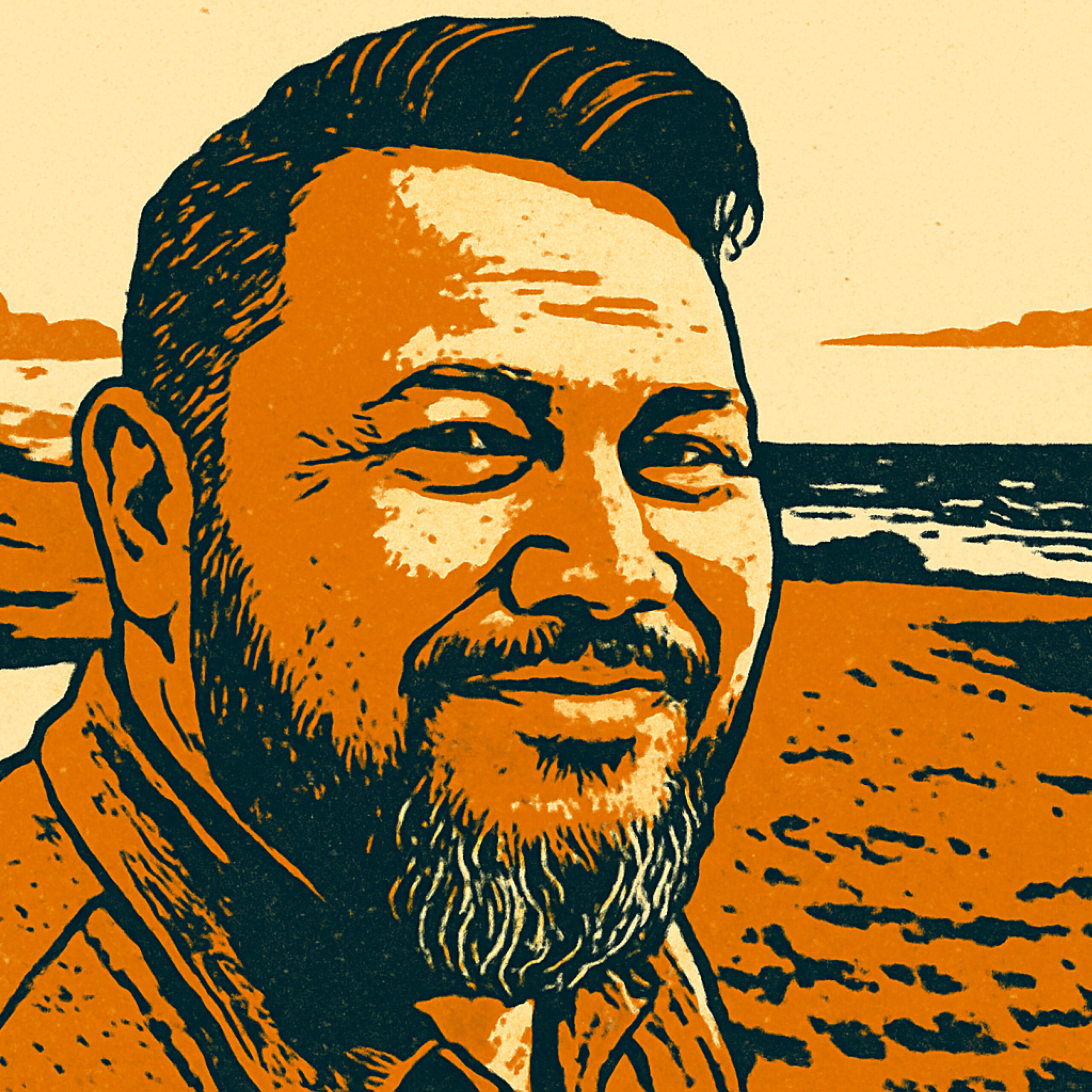
Kenny Wallace on Worshipping as a Black Indigenous Christian
Through scripture, story, Indigenous theology, and ancestral practices, Kenny Wallace reveals how worship becomes whole when we bring every part of ourselves before Creator God.

Episode 8 | September 25, 2025
Robert Chao Romero joins Nikki Toyama-Szeto on Credible Witness to discuss Brown Church, a 500-year tradition of Latino Christian justice. Blending Mexican, Chinese, and Christian heritage, Romero shares his story of faith, belonging, and academic calling. He highlights liberation theology, Antonio de Montesinos’s 1511 sermon, Christ outside the gate, and the cultural treasures of all nations in Revelation 21—revealing a vision for the church as beloved community—where every culture and identity contributes to the glory of God.
Ep. 8 | Robert Chao Romero on the Brown Church, Activism, and Ancestral Faith
/
“When my students heard that Christ suffered outside the gate, it’s like the blinders fall down and there is deep, profound encounter with God.”
What can the Church learn from the 500-year tradition of Latino Christian justice and the way in invited all cultural treasure and wealth into the beloved community?
“When my students heard that Christ suffered outside the gate, it’s like the blinders fall down and there is deep, profound encounter with God.”
UCLA professor, pastor, and author Robert Chao Romero sits down with Nikki Toyama-Szeto to share his story of faith, identity, and justice. From his Mexican and Chinese roots to his experiences of exclusion growing up in Los Angeles, Romero reflects on his journey of finding belonging in Christ and in the church. His groundbreaking book Brown Church uncovers a 500-year history of Latino Christian justice, from Antonio de Montesinos’s 1511 sermon against colonialism to today’s movements for immigration reform and racial equity.
Romero challenges the dichotomy that faith and justice cannot coexist, insisting that true Christianity embraces both. Together, he and Toyama-Szeto explore themes of cultural treasure, the metaphor of Christ outside the gate, and the future of a diverse church that welcomes all identities into God’s beloved community.
Robert Chao Romero is associate professor in the UCLA César E. Chávez Department of Chicana/o and Central American Studies and in the Department of Asian American Studies. Holding a PhD in Latin American history from UCLA and a JD from UC Berkeley, he is the author of Brown Church and other works on immigration, race, history, and Christianity. Romero is also an attorney, pastor, and co-director of the Brown Church Institute, dedicated to exploring the intersection of faith, justice, and identity in multicultural communities.
Nikki Toyama-Szeto is the host of Credible Witness and executive director of Christians for Social Action. She leads conversations at the intersection of faith and justice, highlighting diverse voices that witness to the credibility of the gospel in contemporary society.
Credible Witness is brought to you by the Rethinking Church Initiative. Produced and edited by Mark Labberton, Sarey Martin Concepcion and Evan Rosa. Hosted by Nikki Toyama-Szeto.
Special thanks to Fuller Theological Seminary, Christians for Social Action, and to Brenda Salter McNeill, whose book inspired the title of the show.
For more information, visit CredibleWitness.us.
Nikki Toyama-Szeto: Credible witness is brought to you by the Rethinking Church Initiative
Robert Chao Romero: I meet so many students. I’ve met probably thousands of students over the years as a professor who lose their faith because they’re like, well, I’m proudly Latino. I’m proud of my cultural heritage.
I grew up in the church, local Catholic, or Pentecostal church, what have you, Protestant church, and they get to the university and they’re told you cannot be a Latino and a Christian at the same time and care about justice because they’re taught Christianity is only. The colonizer’s religion. It’s only racist, classist, and sexist.
Nikki Toyama-Szeto: This is Robert Chow Romero. born and raised in Los Angeles a professor at UCLA.
He’s also a pastor. An evangelist has two doctorates, one in Latin American history and the other in law.
And year after year, he sees his students at UCLA finding it harder and harder to relate to Christianity.
For those that grew up Christian, these students are finding it difficult to stay in the church.
Robert Chao Romero: So, so many young people really have like emotional breakdowns over that. Right. so I thought, how could I write a book for that audience of people, right, who are really wrestling with those issues. so they can come out at the end of the day, you know?
Loving Jesus, caring about issues of justice and race and fully being able to celebrate their diverse God-given cultural heritage.
Nikki Toyama-Szeto: So many faithful people today are struggling to reconcile Christian faith and the sometimes rough history of the church with a fresh commitment to justice.
With an understanding of their ethnic heritage, cultural context, and their own sense of identity
Robert Chao Romero: And what I found out as a historian is that there’s a 500 year history. Of Christians, both Protestant and Catholic. In Latin America and the United States who love Jesus, who are tethered to the local church and are on the front lines of justice and race issues, challenging segregation and slavery, and, challenging, you know, the exploitation of immigrants and farm workers.
So for all those young Latinos who wrestle with, how do I reconcile faith in Jesus with caring about justice and Latino culture,
I say, welcome to the Brown Church.
Nikki Toyama-Szeto: I’m Nikki Toyama-Szeto, and this is Credible Witness, A collection of stories and wisdom from faithful people, wrestling with and bearing witness to the credibility of Christian life today. Each episode is an invitation to listen generously and courageously to one person navigating social tension and moral complexity.
Negotiating doubts, struggles and fears, overcoming obstacles, and pursuing justice and living out the convictions of their faith. And every voice reminds us that the church is called to be a credible witness to Christ, a living reality of hope, justice, truth and love.
It doesn’t take a lot to get me to travel to Los Angeles where I met with Robert Charo. From the people to the music, to the unique neighborhoods with lots to see and lots to eat. The world is jammed into a few square miles.
Robert is many things. He crosses a variety of cultures and vocations and perspectives that it’s hard to describe him using shorthand terms. He’s a professor at UCLA and the author of More than 30 books and articles on immigration, race, history, law, education, and Christianity.
He’s uncompromisingly passionate about history, particularly the history of his Latino heritage and his intersection with Christianity. But he’s also a pastor and evangelist, and as a person of faith. Robert’s life is built around the gospel. It’s woven into every facet Of who he is.
Robert agreed to sit down and talk with me about how his experience as a Chinese Mexican American formed his understanding of community and how the young people in his community inspire and stir his imagination around what church can be.
Robert ebbs and flows between his bilingual Latino church community. LA Fuente Ministries in Pasadena, and is teaching at UCLA. His parents, Chinese and Mexican also feel like the perfect blend in a city like this. But growing up in the seventies and eighties in a Los Angeles, that was effectively still segregated.
Finding his identity as an Asian Latino came with its challenges. Each of us long for a sense of wholeness and a weaving together of our many parts. And in Robert’s case, he’s drawing from three very distinctive, informative elements in his life, his Mexican heritage, his Chinese heritage, and his family’s Christian heritage.
Given all these converging stories and inheritances, whether ethnic, religious, or cultural. How does a person effectively bridge them? How do we show up as whole people, not just parts of one.
Robert, can you tell me a little bit about your background?
Robert Chao Romero: Sure. I was born not too far from here in Boyle Heights and I was raised not too far from here in Hacienda Heights. Um, I grew up in the seventies and eighties, which was not too long after the schools were desegregated ’cause the schools around here were not desegregated, um, until like 1970.
Nikki Toyama-Szeto: the greater Los Angeles area? Yeah. The schools are not desegregated. Wow. Yeah.
Robert Chao Romero: for the most part until like 1970 by court order. And so when I grew up in Hacienda Heights, it was like a kind of a recently desegregated suburb, really. Right? And so I was one of the few Latino and Asian kids in the class, my classes. Um, I remember the first day going to school and hearing someone make a terrible blow.
Chinese joke saying, me, Chinese, me play joke, me do peepee in your coke. I remember being called like horrible things like beaner and, and, and there was just always this sense of like, gosh, like I don’t fully, I’m not fully accepted here. And, and a lot of my childhood was sort of trying to figure out, well, how do I fit in?
Nikki Toyama-Szeto: And so you, you’ve referenced a little bit, uh, Chinese and Mexican. Can you wanna unpack, unpack that a little bit for us?
Robert Chao Romero: Sure. So my dad is the Romero side. Um, his family is from, um, Chihuahua, Mexico, which is the northern part of Mexico. They came in the fifties and then to East LA and also in the late fifties. My mom’s side of the family, the chow and the grandson of Calvin and Faith Chow, who were the founders of InterVarsity in China in the 1940s.
A lot of other, other things. they, they fled as refugees to, um, the US via Hong Kong and Singapore because they were like on a hit list. So after the communist took over, like they were gonna kill ’em. So, so, so they came over here and then continued for the rest of their lives, um, ministering among the Chinese diaspora.
Nikki Toyama-Szeto: Oh wow. And, um, was Christian Faith always a part of, of your background and your family?
Robert Chao Romero: I grew up in, in the Latino church I grew up in, in the Chinese church, so it was always there. But I, I really came to know Jesus deeply for myself when I was in law school. And I thought I was there to, uh, just go to law school, become rich and famous, make a lot of money, and then I, I went through a difficult, relationship breakup.
That, you know, looking back, I’m thankful ’cause it led me to Erica. Right. But at the time it was really hard and that’s where Jesus really got ahold of my life and everything changed.
Nikki Toyama-Szeto: Can you tell me a little bit about what was going on at that moment and what was it that changed?
Robert Chao Romero: So right around the time that that breakup was happening, it was, it was the end of my first year in law school at Berkeley. It’s crazy, right? And at the same time I was, you know, I was crying out to God, like, God, what’s your will in this situation? And around the same time I met someone that went to a church, um, in East Los Angeles.
So I, I, I came back after. After first, uh, first year of law school went to that church and that’s where I really met people who really loved Jesus and really cared for me and modeled what does it mean to like really know and love Jesus? And through that, that that experience, that’s where I said, okay, Lord, I’m all yours.
And then that eventually I felt a calling by God to become a professor and then to use that platform to address issues of race and Christianity. And so that’s, that’s been my journey for like the last, uh, 25 years.
Nikki Toyama-Szeto: Because of his extensive work in the racial dimensions of Christianity, I wanted to hear how his own sense of ethnic and spiritual identity informed this work
Why was race and Christianity interesting to you?
Robert Chao Romero: Because of my mixed race background, I’d always thought about like, the meaning of race and ethnicity and, once I, I, I drew into my faith with Christ, like what does the Bible have to say about this? And then of course, that leads into politics. It leads into church, it leads into all these things.
So even if no one paid me anything, I would be thinking about this stuff. And, and, and then, so when I was seeking a calling, I was like, okay, Lord. What can bring together my gifts and talents and passions and good experiences, bad experiences. And I thought, oh, I can do that as a professor.
Nikki Toyama-Szeto: Hmm. That’s fantastic. When, as you were growing up, what were some of the messages that you were getting from the church about race?
Robert Chao Romero: So it’s interesting. I have to talk about it like in a comparative way. and it goes inside and outside of the church. So growing up in, in, in a white community, again, you were sent the message like, you don’t really fully belong here. Right. in, in the Latino church, so all immigrant families and outside of the church.
People were treated terribly, right? And so they came to church and were given dignity, right? They were like, okay, well someone might have worked a job that nobody else wanted to do during the week, but on Sunday they were a pastor, or they were deacon, or they were elder, they were armo, they, they were arma.
But even within the Latino church, like, well, first of all, as Latinos were super diverse, right? Ethnically, racially, Asian, Latino, Afro-Latino, indigenous, meso, all kinds of things. So within that church space. It was still very much like we brought the racial attitudes from Latin America to the US and there’s a lot of racism there, the desire for most people was to be. Considered European and Spanish like, and then you bring that from Latin America, and then there’s the desire to fit into the us um, normative majority culture and, and to claim whiteness. So, so there was a lot of racial jockeying, ethnic jockeying in the Latino side of things, in the Chinese side of things.
It was, it was like a lot of. Not much direct discussion of race. Sometimes, I mean, sometimes, I mean there was a clear awareness, like, okay, like, I mean like my grandfather for example, one of the rea, one of the things he did when he came to the US is he vowed never to work for a white person because in China, um, the mission, one of the missionary organizations he was working for, they dressed him down because he didn’t wanna stay in China when the communists took over ’cause they’re gonna kill him.
And they basically called him a coward. And took away his position and authority. So after that he vowed himself like, I’m never going to, I’m always gonna be independent. So there was that sense of, of, of race. At the same time, there was the sense of like, okay, hunker down study. We love Jesus, but we didn’t really want to get involved with kind of the explicit racial discussions.
Yeah.
Nikki Toyama-Szeto: Yeah. Uh, and, and then for yourself, because it sounds like, uh, you have a foot in each of two very strong cultures. Both with a seeming like a, a strong heritage and a strong sense of that culture. How did that feel for you as somebody who was bridging both of those? Um, where were the places that you felt like you belonged or what were some of the things that you felt like you had to navigate that was maybe specific to you because of who you were?
Robert Chao Romero: So I, I didn’t bridge it. I did not bridge it for many years. So in elementary school, once I heard like these different anti-Chinese, anti-Asian sentiment, I. In my young mind, like I didn’t do it consciously, but I thought, Hey, what’s my closest bridge into whiteness? And ironically it was my Mexican side.
’cause my dad’s side is white passing and they come from a more p privileged background in Mexico where they are considered white actually. Um, now people in the US didn’t consider them white, but that’s another story. Right? But, and so I just leaned into my Mexican heritage, gosh, until my early twenties.
I was like, I identified, like if people would ask me, oh, I’m Mexican American. For those, all those racialized reasons. And it wasn’t until like, after Jesus got a hold of my life and I started to realize, oh my gosh, you know, I wanna explore my Chinese heritage. And I went to a Chinese church in law school where I met some of my best friends and then, and my PhD after law school, I went to, you know, Asian American churches for a number of years.
And so it’s been a whole journey. It’s been a a, a big journey.
Nikki Toyama-Szeto: That’s so interesting. So you’re mindful of the fact that when you were young and being formed, you pivoted to a place that was gonna give you the access to pass most easily, and that was through your Mexican community and, and that side. you’ve done some research. Studying some of the communities in Mexico, what was the personal journey that led you to those particular areas of specialty and curiosity?
Robert Chao Romero: you know, my PhD is in Latin American history. So obviously I’m a young grad student and I rem I had remembered my parents saying they had friends in Mexico who were Chinese. Oh. And it always stuck with me, right? But I, so when it came time to pick a topic, I, I remembered that.
And around the same time, LA Times had like this food section on Chinese food in Mexico. And then, um, it just turned out to be a great topic because no one had written a major book about it yet. And so in, you know, in academics, they love that kind of stuff, right? First book kind of thing, right? And so, like, as I.
So it gave me a chance to, so I did my first book about the Chinese in Mexico, and it was perfect ’cause I got to study myself, right? What led Chinese people to immigrate to Mexico? How were they excluded from the us? How did that fit into larger, you know, immigration laws, history of Mexico and so forth?
Um, so I, I, I studied that for many years. And then, um. My research over the last 10 years totally pivoted to the study of Christianity and race. Um, I had worked for the first number of years being a professor in pastoral ministry with my wife, where we worked with young students who were wrestling with How do you follow Jesus and care about issues of race and justice?
My research had nothing to do with that, but I became a pastor and so for the first 10 years or so, I was like, my worlds were totally separate. My research world and my ministry world. And then one day I was like, um, I had gotten tenure and I was like remodeling our kitchen and I was full of drywall from head to toe.
And I was listening to, to Lauren Hill, her MTV album shows you how old I am, but there’s a line. There’s a line where she says, I’m tired of leaving. Two thirds of myself outside of the door when I make music. And I thought to myself, dang it, I’m tired of leaving two thirds of myself outside of the academic door when I do research and teaching.
I’m gonna bring together God willing, God help me to bring together my, my pastoral experience with my ministry experience. And, and I, I was really super scared because religion is really taboo a lot of times, especially in, in the academy and ethnic studies. Um. You know, just a lot of prayer, a lot of different things where God, I felt like God opened the path.
So that led me to sort of try to reconcile, well, how do I understand Latin American history and US Latino history, um, with, uh, issues of justice and Christianity and theology. And then that led to, um, a book I published a few years ago called
Brown Church.
Nikki Toyama-Szeto: For the past 15 years, Robert has studied the history of Christianity in the Latino culture, culminating in his 2020 book Brown Church. It’s a history marked by struggle for justice and human dignity. Care for those on the margins,
and a persistent search for a holistic gospel, and it’s a history much older than America and even older than the Protestant Reformation,
Nikki Toyama-Szeto: Tell us a little bit what, what does that mean? What is Brown Church? So.
Robert Chao Romero: So first of all, it’s really important to, to kind of talk about the audience of Brown Church. I meet so many students. I’ve met probably thousands of students over the years as a professor who lose their faith because they’re like, well, I’m proudly Latino. I’m proud of my cultural heritage.
I grew up in the church, local Catholic, or Pentecostal church, what have you, Protestant church, and they get to the university and they’re told You cannot be a Latino and a Christian at the same time and care about justice because they’re taught Christianity is only. The colonizer’s religion.
Oh wow. It’s only racist, classist, and sexist. Right. So, so many young people like are just, you know, really have like emotional breakdowns over that. Right. And, and so I thought, how could I write a book for that audience of people, right, who are really wrestling with those issues. Um, so they can come out at the end of the day, you know?
Loving Jesus, caring about issues of justice and race and fully being able to celebrate their diverse God-given cultural heritage. So Brown, I wrote Brown Church and what I found out as a historian is that there’s a 500 year history. It’s actually longer than 500 years of Christians, both Protestant and Catholic.
In Latin America and the United States who love Jesus, who are tethered to the local church and who are, who are on the front lines of justice and race issues, challenging segregation and slavery, and, um, challenging, you know, the exploitation of immigrants and farm workers. People like, like Caesar Chavez or people like, you know, today, like Alexia Salva Tierra.
Nikki Toyama-Szeto: Robert told me the story of Antonio de Montesinos, a Dominican friar who spoke out against Spanish colonialism, criticizing the enslavement and unjust treatment of indigenous people in Espanola, the island that we now know today as comprising of Haiti and the Dominican Republic.
Delivered on December 4th, 1511. Montesinos based his sermon on Matthew three. Three. I am a voice crying in the wilderness speaking truth and justice to power. He preached.
Tell me by what, right or by what interpretation of justice do you keep these Indians in such a cruel and horrible servitude? By what authority have you waged such detestable wars against people who are once living so quietly and peacefully in their own land?
It was an act of incredible solidarity and bold protest against an incredibly powerful and global Force at the time, the governor of the island was none other than Diego. Columbus, son of Christopher Columbus, and it led to.
Montesinos censure, but it fomented a movement that continues today
Robert Chao Romero: So I refer to the Brown Church as like this little known. 500 year history of Latino Christian Justice. And I will add too, the Brown Church predates the Protestant Catholic divide.
Nikki Toyama-Szeto: Is that right? Yes. And and why is that important?
Robert Chao Romero: It’s important because a lot of times, and so first it, it, it traces back to 15 11 15 11, which was a number of years before Luther nailed his thesis right in Wittenberg.
And it was when there was a priest again before the Protestant Catholic divide in the island of the Dominican Republic Today. Who, who, who he went to Sunday. He went to church one Sunday and he said, okay, all the, all your rich Spaniards on the island, right? Um, you know, Christopher Columbus and all that.
He, he says, come to church and you’re gonna hear the strangest sermon you’ve ever heard. Right? He said, my, my words are gonna be the strangest things you’ve ever heard, right? I’m the voice of one crying out in the wilderness. And he tells us all the Spaniards rich Spaniards who are colonizing and enslaving indigenous bodies and taking their land, he says to paraphrase.
God gave you the opportunity to share about Christ with love with all of these indigenous peoples, but instead you’ve exploited it as an opportunity for selfish gain. And if you don’t repent, God’s gonna send you to hell. It was the first racial justice sermon in the history of the America’s, right?
Nikki Toyama-Szeto: And what was the date on that again?
Robert Chao Romero: It was.
It was the Sunday before Christmas in 1511.
Nikki Toyama-Szeto: Wow.
Robert Chao Romero: And ever since the Brown Church again, this Christian Justice, Latino tradition has forged on. So for all those young Latinos who wrestle with, how do I reconcile faith in Jesus with caring about justice and Latino culture, I say, welcome to the Brown Church.
Nikki Toyama-Szeto: A long line and a long tradition.
Robert Chao Romero: powerful.
Nikki Toyama-Szeto: Wa was that a surprise to you to, to go into this and discover this long history?
Robert Chao Romero: It was absolutely because, you know, um, I never learned about it right. In either for my PhD in history, maybe just a tiny little bit, right? Um, again, in, in most of my education taught me, uh, most of my education taught me that Christianity was just this colonial religion, right? Um, and even like, you know, in most Christian, well in most Latino churches, they don’t know about it either.
Most seminaries. Most seminaries it’s not taught about, but there’s this, again, this rich history and also like this rich theological trove of reflection. And so even to this day, it’s like a hidden treasure that most people, Latino or not don’t know about. So I was very surprised, but I had learned. What I learned though was that there was this amazingly dedicated group of people over the last maybe 60 years, Latinos and, and Latinos in the US and in Latin America, who had been doing theology.
From this perspective for like last 60, 70 years. And it’s like a treasure. It’s a treasure.
Nikki Toyama-Szeto: And And who and who were some of those guides who have been sort of doing that work in the last 60 years or so?
Robert Chao Romero: Sure. So like in Latin America, some of my favorites are like, um. Um, of course there’s Gustavo Gutierrez, which many people have heard about, and his first work on liberation theology. I know that’s a scary term for many people. We can talk about it, but, um, Renee Padilla Sambar, who are Protestants, who framed this idea of this idea of, you know, the church’s mission being holistic, right?
God wants to transform every aspect of who we are and the world and, and every pain and brokenness of society. But the story, um, of Renee Padilla and Samuel Escobar, I think is is quite instructive for our time. Because they were experiencing what we are experiencing now in the United States, but like 60 years ago, right?
So in the US today, so many people are like, well, how do I understand issues of race and justice and be a Christian? And like, you know, there tends to be like a dichotomy like, well, if you care about justice and you don’t love Jesus, but if you care about Jesus and then justice issues and race issues or like some kind of leftist agenda, they were resting with those same things in Latin America.
But like 60 years ago, and they had been trained in the United States in a very, um, individualistic gospel. Like, um, if, you know, we believe in Jesus so that we can have a personal relationship with him, which is tremendously important. Right. It’s a foundation. Right. Bera. But they went back to Latin America and they went to the college and university campuses.
Campuses, and they said, I. Believe the good news. Jesus loves you and died on the cross for you and wants to have a personal relationship with you. Again, that’s, that’s good news and amazingly important, but the students who are experiencing civil war and murder by governments and famine and all these things, they basically said, why?
You know, I guess that’s okay, but. What does your gospel have to say about the fact that my uncle just got, you know, murdered by, by government forces who were sponsored by the US military. Right. Or, you know, my aunt has disappeared or no one on my block has food to eat. And they just murdered 10,000 indigenous people.
Right. In Guatemala. Right. And, and Padilla and Escobar. They said, oh my gosh, those students are right. Right? And they said, oh my gosh. The gospel is like a plane with two wings. There’s the verbal proclamation of the gospel. That’s one wing. Jesus Christ is Lord and savior and died in the cross and rose again, right, to make us and the whole world new.
But then there has to be, as the second wing, the embodiment of that acts of justice and mercy and faith without works is dead. State the analogy, another way, um, one wing of the plane is. Christ’s personal transformation of ourselves. You know, every aspect. Every aspect of who we are physically, emotionally, spiritually.
But secondly, the second wing, God’s transformation of everything that is broken and unjust, right in society today. And without the two wings, the plane doesn’t fly. It crashes. Right. And that’s why so many people, so many people are jumping out of the US plane right now. Wow. ’cause they’re like, this plane doesn’t work.
Right. But the good news is like we can look back to the history, of the Latin American church and the US Latino church and you’ve, you can find all these people who love Jesus passionately, right. But also cared about justice.
Nikki Toyama-Szeto: As a professor, Robert is highly attuned to the lives of his students and in them, he sees the future, but More and more students are being repelled by a Christianity that seems to be at best tone, deaf to justice, and at worse, the very perpetrator of injustice
Robert Chao Romero: As you’ve discovered this treasure,
Nikki Toyama-Szeto: as you’re engaging with this long history and this long and rich tradition, how does that play out in your life? How does that play out in your community today? I think some folks sort of say history is history.
Robert Chao Romero: Hmm. Well, first I like to say like, because I’m a professor, right? It plays out in the lives of students, right? So I’m a professor at UCLA. Public institution. So if anyone from UCLA is listening, like I respect the separation of church and state. Okay? Now that being said, right in my classes, I can objectively teach about, well, what is this history and this theology, right?
But I taught this class, um, on Brown Church, brown theology recently. Just introducing all of this, this world as much as possible in, in one quarter. And afterwards, again, this wasn’t my goal, but people said things like. I’ve come to know, again, the God that I’ve always known, but I didn’t know, you know, that, that God cared about these issues that are so dear to my heart.
Right. Um, that’s, that’s just to, to paraphrase or. Or, you know, things like that. Right. Or they say, I didn’t know that you could bring these two together. Right? Chicano studies, ethnic studies doesn’t have a space for this, but the church I grew up in doesn’t have a space for this and one, and so it’s like, it’s, there’s a, there’s powerful spiritual fruit when, when we discussed that intersection, right?
And one thing that really struck my students was there was a book called Christ Outside the Gate by Orlando Kta, Christ Outside the Gate. And he, he uses this metaphor from Hebrews 13. Or the author of Hebrews says, you know, Christ suffered for us outside the gate. Right? Um, so make us a holy people to paraphrase.
And then he says, we must go to meet Christ right outside of the camp. And so many Latinos and Latinas. Not all again, ’cause we’re very diverse. There’s rich Latinos too. But so many of us like have suffered outside the city gate. Myself when I was in was, was in school growing up. I said they barely let us back into the city gate, right?
But many, so many Latinos and Latinos still experience life outside of the city gates, metaphorically. And when my students heard that, that was Christ experience as well, it’s like the blinders fall down and there is deep, profound encounter. God.
Nikki Toyama-Szeto: This image, this metaphor of Christ outside the gate is powerful.
It’s so subversive for most of us to conceptualize and understand the suggestion that Jesus would be found with the undocumented, the locked out, and the excluded. Not just speaking for, but physically present with the marginalized. And the oppressed
Robert Chao Romero: Ministry, also plays out just in the local church setting, so I go to an amazing church called La Fuente Ministries here in in Pasadena. It’s a small but mighty church, it’s a space again where you’ll. Go to go there Sunday. Hearing people worshiping their hearts out to God, People praying.
And you know, in the Latino community you experienced radical things, right? There’s this vital faith where you know, people are healed, right? Literally, like people are healed. Lives are changed. People, you know, really dramatic personal experiences, but you’ll, you’ll also hear in the same breath, right? Oh my gosh, um, our friend is gonna be deported.
Let’s all rally together and gather the whole community, and let’s do like a worship service outside of ice, right? Let’s call our Congress people. Let’s, let’s gather all the, you know, local Latino churches in LA and throughout the country. And we see God working that way too, right? So. Like the two wings of the plane, right?
And a clear acknowledgement of the brokenness of US history, right? And of Latin America. See, as Latin Americans, we don’t shy away from the bad stuff, right? Like in the US there’s like, oh, but. But the US has, yes, there’s been wrong things, but it’s only been great. And if you have anything else to say, forget you, Latin America we’re like, let me count the ways of all the horrible things Right.
In history. And, and it’s, it’s just a, it’s just like an honest reflection. Yeah. So that we can get to the healing.
Nikki Toyama-Szeto: So the ability to hold the good and the bad at the same time. Yes. And that both of those might both be true.
Robert Chao Romero: Yes.
Nikki Toyama-Szeto: As a starting place. Exactly. That’s fantastic. Um, can you say, going back to what you said about uh, the ways that the Latino community and yourself, um, have felt like you have lived outside the gate, can you tell me a little bit of what are the things that signaled to you or to the community, oh, your place is outside of the gate.
What are the things that sort of said, Nope. That’s for those inside the city walls.
Robert Chao Romero: So a story of, you know, several years ago, um, there was a pastor, pastor Noe Noe, and he, um, came to the US as a child refugee because he was basically like captured by, by gorillas, um, during the Civil War in Guatemala. Like, you know, when he was a kid. Came to the US as an unaccompanied minor. Um, he eventually, um, married a US citizen wife, two US citizen kids, became a pastor in the Assemblies of God denomination, owns his own business. And then you start hearing this political rhetoric, like, oh, Latinos are, you’ve heard all the, all the lines, right? Rapists and criminals, and I suppose some are good people. And Pastor Noya was like. My gosh, I’m not sure what’s gonna happen to me. Right? And one day, pastor Noe, you know, contacts, um, some, um, friends and leaders from the Matthew 25 movement and says, I think I have a bad feeling about what’s gonna happen to me.
And Pastor Noe Arias get swept up by ice and they’re gonna deport him, separate him from his family, right? And we’re like, oh my gosh, this guy’s a pastor. No criminal record, all these kinds of things,
like what’s business owner,
small business
Nikki Toyama-Szeto: member of the community. Yeah.
Robert Chao Romero: All these things. Like, or another example of outside the gate, um, one of my students, I was teaching a big class, like 400 students, and she comes up to me and she says, pros, professor Romero, can I get the slides for the last couple of weeks?
I’m like, sure. What happened? And she said, well, my mom has papers, meaning she’s documented. But she got swept up at an ice raid at her workplace, and we haven’t hear heard from her in six days. Wow. So she said I had to go back home to my parents to watch my little siblings, even though I’m A-U-C-L-A student, so my dad could find my mom.
Right. Those are things that make us feel outside the gate. Right. Um, you know, many, many things, you know, like that.
Nikki Toyama-Szeto: Wow. So to find the power of the presence of Jesus in the community outside of the gate, whereas. Sometimes what the church communicates is, no, the church is within the gate actually to discover the Jesus who walks in the community outside the gate.
Robert Chao Romero: Go to Jesus outside the camp.
Nikki Toyama-Szeto: Yeah. Yeah.
Robert Chao Romero: And
that’s where we find him.
Nikki Toyama-Szeto: Yeah. Oh, that’s powerful. That’s powerful.
you talk to us a bit about your understanding of Revelation 21?
What is that passage for those who might not be familiar?
Robert Chao Romero: So, revelation 21, John is describing what’s gonna happen. You know, Jesus comes back, makes all things new. What’s, what are some images, some pictures that we can, you know, wrap our brains around, right. And, and one of the things that John says, you know, he says, oh, and there’s gonna be no nighttime there.
We’ve maybe probably heard that. Um, the glory of God gives it light and so forth. The lamb is it, lamp. But then in, in Revelation 21, 26, John says, the glory in honor of the nations will be brought in. Into the new Jerusalem, like forever. To paraphrase the glory, the glory and honor of the nations will be brought in as like tribute, right?
Like, like, like, the Greek word glory is dosa, right? Which has a number of layers of meaning. But, um, you could think of dosa as like treasured wealth. According to my, again, my interpretation, my reflection, that there is this cultural treasure in wealth, this ocsa of the different ethnic groups of the world.
The nations can be translated, you know, different ethnic groups. So there’s this idea that all of us, from whatever our cultural backgrounds, we have this, this cultural treasure and wealth, right? That’s God-given, right? That’s for the worship of God. Right? That’s where we get the word ology.
Oh my gosh. Word worship. Right? So this picture of like people, all of us from whatever our ethnic background or backgrounds are. Bringing before God as tribute, um, this cultural treasure and wealth and, um, but I should say verse 27 says that nothing that causes impurity will be brought in. So our ethnic cultures and us as individuals, we have our cultures also have sin, right?
So, but, but in that sense, we’re all, even right, we all have Dosa glory and honor our cultural treasure and wealth. That’s for the worship of God, but we all also have cultural sin. We need Jesus, right? Um, so like, say like in the Latino culture, right? Or in, in the Choctaw culture as, as Kenny was talking about, pick your culture.
Like there’s distinct ways in which we reflect the image of God uniquely, right through the tangible elements of culture, the worship music, the foods, the dance, the travel, all those things. That, and also, but that cultural treasure and wealth gives us distinct lenses to see the world. See the problems in the church, to know God better.
We need all the glory in order to glorify God. I’d love that. We, we need all the glory to glorify God. And unfortunately what’s happened is that many ethnic communities, Hispanic, native American, and all of their di, all of our diversity, Asian American and so forth, middle Eastern, because we have been excluded, um, from the city gates.
We’ve been forced to leave our glory outside the city gates as well, right? And that happens when we come into schools, hospitals, politics. It happens when we enter churches and we’re asked to metaphorically leave our glory and honor outside of the door. So we can’t really worship too because we’re, we, we can’t even bring in our, our own treasure to offer a tribute to God, right?
Um, Christian institutions. Seminaries Christian colleges, and I think that’s a lot. At the heart of the struggle of, of, of our racial problems in the US today is just not realizing that, oh my gosh, for far too long, so many people have been left outside of the gate and not allowed to bring in their dosa, their glory and honor ultimately for the glory of God.
Nikki Toyama-Szeto: Hmm. That’s beautiful. What is it that you hope the church will recognize about the gift that the Brown Church brings to the broader church?
Robert Chao Romero: so I’m a pastor too, and my ultimate, there’s two things that I really drive me. Number one. I want people to know Jesus. Jesus transformed my life. And I want everyone to know that, to know that experience too. Um, and so I want people to know that like the Brown church is a model. It’s a God-given model.
It’s with treasure and wealth, right, of how you can love. We can love Jesus with all of our hearts and minds and souls, right? And also, you know, pursue justice and love our neighbors as ourself like it’s possible. And when we embrace both of the wings of the plane. Jesus becomes irresistible. Mm-hmm. The church becomes irresistible, but when conversely, when we don’t, then um, the church becomes very resistible.
Right. And very repulsive because people think, oh, I, I can’t be a Christian and care about issues of justice and race. Right. Um, I think secondly, yeah. So that there’s that impulse of, of, for, of, of evangelism. And then I think that. Secondly, God is bringing all this treasure right to the us. It’s like hidden treasure.
Think about there’s what, three, 330 million, um, people in the US roughly. Think of all the treasure that’s there, Asian American, Latino, native American, African American, and so many different things, right? That’s just untapped. It’s like, it’s like a, this just picture, that image of, of treasure, right? Mm-hmm.
And I think God wants to, I, I’m, I’m almost certain, I’m certain actually that God is gonna renew the church through that treasure that God is bringing. God is bringing. Right? And so sometimes as people are very pessimistic about, oh, the church is in decline, and it is in decline. And unfortunately it’s largely the white church, unfortunately, I, I doesn’t, I don’t see that with any, any glee or gladness like, but the churches that hold, hold onto that bifurcation of justice and Jesus race and Jesus, they’re the ones that are in decline, right?
And all the, all the nuns, right? Those that are not acknowledging any particular religious identification. A huge part of it is because of the bifurcation. At the same time that that’s happening, there’s a diversity explosion in the US right? And an explosion of treasure, cultural treasure and wealth. And the church, the Latino church is thriving, right?
Asian American churches is, is thriving like different churches, right? Black church. Um, and I think that God’s gonna use all that treasure, right? To make the church rich again.
Nikki Toyama-Szeto: Hmm. Oh, that’s beautiful. As you think about for your family and for future generations, what do you hope will be true about the church in the future?
Robert Chao Romero: I hope that my kids and my grandkids, whenever that happens, and just everybody will be able to bring their full selves. Like Laury Hill said, bring their full selves into the church, bring their full selves into society. Not having to like, like, you know, I had to kind of squeeze myself into like, I had to repress some of my DOA and then try to just replicate other people’s DOA to feel like I belonged.
Um, and I, I hope the time will come and we don’t have to do that. Right? I can come as my full self, you know, Robert Chow Romero. God’s child, right? With all this do, uh, I don’t have to leave any of it outside the door, right? Or outside the gate. Um, I hope that for, I hope that for everybody,
Nikki Toyama-Szeto: That’s beautiful. What does it feel like to have to leave part of yourself before you can move on or enter into a place?
Robert Chao Romero: it’s the worst feeling because you don’t belong. No matter how much people might say, oh, but you belong here, I’m colorblind. Mm-hmm. You don’t belong. Right. Um, and without belonging, there’s no true community. Without belonging, there’s no learning. If there’s no belonging, then I mean that’s, that’s everything else which kind of crumbles.
If, if, um, once I remember, a brother from Texas, he was Hispanic, called me and he said,
you were talking. He’s like, Robert, you know, I go to this local church in Texas.
It’s a
reformed church. Many great things about the
Nikki Toyama-Szeto: church.
Robert Chao Romero: They love me, they love me to Jesus, and they, they truly care about me and my family on an individual
Nikki Toyama-Szeto: level.
Robert Chao Romero: But
Nikki Toyama-Szeto: he said,
Robert Chao Romero: in this church, I’ve forgotten that I’m
Nikki Toyama-Szeto: Latino.
I’ve
Robert Chao Romero: I’ve forgotten
that. How much? And he’s like, what do I do? Like, you know, do I leave the church? Do I stay in the church and try to make
Nikki Toyama-Szeto: an impact?
Robert Chao Romero: Um,
and
it, it’s, it’s, in other words, he’s saying like, I don’t really belong. Right.
Nikki Toyama-Szeto: My,
Robert Chao Romero: my tribe is not welcome.
Like, think about like Revelation seven, right? Every people of every tribe language nation in tongue, that’s the ultimate picture of belonging. As Latinos, Latinas, a lot of times our tribe is not welcome. Our tribe is forced to stay outside
Nikki Toyama-Szeto: the
gate
Mm-hmm. Mm-hmm.
Robert Chao Romero: with all that that
Nikki Toyama-Szeto: implies.
Robert Chao Romero: So I mean, the body of Christ will always be fractured unless than what God wants her to be.
We will never be able to grow into the full stature of the maturity of Christ as long as some of us are not
Nikki Toyama-Szeto: welcome.
Robert, I’ve heard you talk about the beloved community. Can you tell us a bit about how that connects into some of these things that we’ve been talking about today?
Robert Chao Romero: some people have told me, Robert, why are you talking about the Brown church? There’s no Brown church. Yellow church. Orange church. There’s just the church and. First I wanna say like, but people have said, oh, there’s Swedish reformed churches and debts reformed and there’s the black church there. How come I can’t say Brown Church, but that’s neither here nor there. Um, my point is that, well first of all, that we are God’s children. Two, we’re one of the tribes, right? As the Brown Church, you know, we have as a by God’s design. Us and Latin American Christians, Latino Christians, and you know, like, just like Moses journeyed with the Israelites for 70 years in the desert, right?
With, with Yahweh, we’ve been journeying with Jesus for 500 years or more. So first of all, there’s a question, there’s an issue of we’re not issue, but the point being made that like, you know, we’re God’s children too. Right? That’s, that’s all I’m saying. Right? And God has many children, but secondly, the Brown Church does not exist for the sake of the Brown Church.
I’m not talking about ethnic nationalism here, but the Brown Church, um, has unique experiences and perspectives that are a distinct entry point into the beloved community of all. Wow. Yeah. So like if you could come to our church, LA Fuente Ministries, right. And Marcos and Rosa and others, you know, Drea as the pastors. You’ll see people of every ethnicity, um, diverse Asian backgrounds, Latin American backgrounds, um, different European descent, like, so the goal is, is the beloved community, but the Borough Church is just a distinct entry point.
Nikki Toyama-Szeto: it’s amazing to me. That with such a long history, with such a, robust theological reflection and, and sort of demonstration of the faithfulness, uh, to God in that long history, that it is something that is not commonly known.
Can you tell us a bit about why do you think that that is? That it isn’t something that is more familiar to a broader audience.
Robert Chao Romero: I think that has to do with the structures of theological education, the structures of, of denominations, and. Christian cultures, um, in the US and Latin America. So you know, most seminaries in the United States, for example, were created at a time and in such a way that did not have us in mind as Latinos and Latinas.
so for example, at the time that the same year that Fuller Seminary was created, and I love Fuller, right? It was the same year that there was a famous legal case called Mendez versus Westminster that challenged the segregation of Mexican students in Southern California. Right. The same year that Fuller was founded.
As far as I can tell, I’ve never seen anything, any connection between Fuller and, you know, um, this famous case and Fuller and, you know, just. The larger structural issues or racial issues that were happening around it. I’m not trying to shame Fuller.
Nikki Toyama-Szeto: So the case is sort of saying Mexican, Mexican American students should have access to education as well.
Robert Chao Romero: should be integrated with white Okay. Okay. And so, but think about that, you know, how society was, was, uh, kind of, uh, structured then, right? Pasadena was segregated. There was the, the, the Latino and African American side of town. There was the white town. There were, um, residential segregation was official.
Like in the law. There were all these things, right? And so think about then how the, how the, the structure of, of seminary education was, was taught, was, was structured. Right? Who was being taught, what was being taught, you know, who was being read. Um, and at the same time that all this was happening because there was segregation.
Mexican Americans and Latinos were viewed from a cultural deficit perspective. Right. As not having glory and honor. Right. Glory and honor in US society at the time was like, it was, it was literally something that people taught only whites had. Right. And, and for Latinos, Asian Americans, African Americans, native Americans to, to participate in US society. You really had to sort of just buy into that only, only European American culture had glory and honor, and so. Again, that structured the education. What books did you read? Who did you read? Um, and
Nikki Toyama-Szeto: so whose,
whose history did you
Robert Chao Romero: learn?
Whose history did you learn? Right, exactly. Um, and the structures of seminary education.
You know, I think that’s why there’s a, it’s a big moment, right? Where, where it’s, there’s a lot of change and people are sincerely thinking about these things, right? But they, because they haven’t been exposed to all the history and theology. For all this time. Right? They don’t know that it exists. And then if you talk about like, um, Latino churches, right?
Where have most of our leaders been trained? Right. They’ve been trained in, in educational institutions, seminaries, bible colleges that are based upon the model that they received. Yeah.
Nikki Toyama-Szeto: You talked a little bit about Gutierrez Liberation Theology about Padilla and Escobar and gra. Can you say a little bit more about what it was that they saw happening in their communities and how they were fueled by their faith to respond to the moment?
Robert Chao Romero: So picture Latin America in the 1950s and sixties. Civil War revolution, neocolonialism, genocide, you know, hunger, poverty, so many things, right? Yeah. And that level of poverty and suffering became so great that all people, most people said, you gotta do something about it, right? In the religious world and outside of the religious world. So within the Protestant, you know, um, circles of, of Padia and Escobar and others, again, like they said, well, what do we do about that? Right? Like, how do we study scripture to think about these things in a Jesus centered way, right? So they developed this idea of, again, integral mission, right? That Jesus, Jesus is the Lord of all right?
And Jesus came to transform all of us and all things. Nothing and no one is left out, right. Mm-hmm. That, you know. Um, so Misra developed in a very specific way, right? In the Protestant context and the Catholic side of things. At the same time, people were asking the same questions, right? What do we do about this?
Right? And so the bishops of Latin America got together in me. They yen, Colombia got together and they said. Basically, what do we do about this? Right? Um, and there’s a lot of different perspectives and about how to do this, but they framed the central concept that is so powerful, you know, to this day. And that concept is, is called the preferential option for the poor.
mm-hmm.
God’s preferential option for the poor doesn’t translate well into English, right?
Nikki Toyama-Szeto: so it sounds better in
Robert Chao Romero: Spanish.
um, but the connotation in Spanish, right? And indeed just the meaning of, of that phrase means that. God’s heart goes out in a unique way for the poor and immigrants and all who suffer.
Mm-hmm. So if, if there is a poor person, a person who’s suffering, an immigrant, who’s deported, person who has no food, then God’s heart as a father says, I, I uniquely care for, you know, that person doesn’t mean I don’t love all my children. So, like, think about it this way, an analogy is like, um, I’m a dad and I’ve, you know.
Two kids. I love both my kids absolutely equally right? With all my heart. They can’t even imagine how much I love them. But if one of my kids is beating up the other one in that moment, I have a preferential option for the kid that’s being beat up, right? Um, and, and so that’s really the preferential option for the poor.
Now, at that time, I remember I heard, I heard NT Wright say this. At that time, in 1950s, 1960s, pretty much the whole global church had forgotten about this unique concern of God’s heart. It was like a, so it was like this, like a, a rush of wind that came in to try to figure out, okay, how do we center the poor?
Right? And what the Bible says and scripture and so forth. It wasn’t all perfect, right? It wasn’t all perfect, but they had to rethink, like, you know, both Paia Escobar, um, on the Protestant side and, and, and the Catholic side of liberation theology. How do we do theology? How do we think about God in a different way?
How do we think about God? You know, how do we study the Bible, our methods? How do we think about who’s Jesus in light of all this? What is the church, right? Because the church really had become up to that point really just comfortable and like, yes, okay. It’s just about, you know, our personal relationship with Jesus.
And meanwhile, all of society was going to hell in a hand basket, right? So liberation theology. It kind of rushed into that vacuum in many ways that stand the test of time. Mm-hmm. Some ways that don’t, right. I mean, there was for example, like, um, a bending towards Marxism by some. That was where it probably wasn’t helpful.
And so I think there are, there’s critiques, but 60 years later, like, I mean, that central truth is still there. And liberation theology, though, has become a boogeyman. It was like the boogeyman before CRT. Liberation
Nikki Toyama-Szeto: Theology before Critical race
Robert Chao Romero: before critical race theory. Before critical race theory. Uh, liberation theology was similarly kind of like a boogeyman.
And, and so the nuances of it though, and, and, and the value of it, um, has not really been discovered, you know, by, by many in the US context.
Nikki Toyama-Szeto: liberation theology, having something of this posture or approach of this preferential option for the poor. Like kind of the lived out understanding of liberation theology was this preferential option.
Robert Chao Romero: It was like, what do those 2000 verses of scripture say about the poor and immigrants and all who are on the margins and how do we implement that? Right. Yeah. In practical ways.
Nikki Toyama-Szeto: You’ve mentioned a little bit about this kind of the parallel emerging of liberation theology and. Can you tell us a little bit about some of the similarities between those two streams and maybe also some of the distinctives between them?
Yeah.
Robert Chao Romero: And if I could add, I’ll add a third stream of, of us Latino. Latino theology. So distinctive theology developed by people like Gusto, Gonzalez, Elizabeth nda, Frazier, and others. Right. Um, so there’s also that, like specifically in the US context. What, what draws them together? Well, first is, is is this same concern for those on the margins, right?
Like saying like in God’s perspective from the scriptures scriptural perspective, if a poor pers, it’s like Matthew 25, right? If a poor person is suffering, then Jesus is suffering. If an immigrant’s family is being broken apart, Jesus cares about that. Right? So much that he identifies so closely with that, right?
Um. You could say the same thing in many different ways, but at the heart of it, it’s like, it’s just, you know, drawing our attention back to those 2000 verses of scripture, they’re so clear. Right. Um, that talk about God’s unique concern for the poor. Now they do that in many ways, right? And they each contribute unique ways.
So to give you an example from US, Latino theology, um. Latino theologians in the US Latina theologians have drawn attention to the fact that the gospels talk so much about Galilee, this place called Galilee. And they’re like, why? When God came and you know, incarnated in Jesus Christ to bring redemption and salvation to the world, why did he choose to be raised in Galilee?
This place called Galilee? Choose all of his earliest followers from Galilee. Right.
Nikki Toyama-Szeto: As opposed to
Robert Chao Romero: Jerusalem.
As opposed to Jerusalem or anywhere.
Nikki Toyama-Szeto: Yes.
Robert Chao Romero: Um, die in Rose and say, okay, I’m gonna die and rise again, and then meet me in Galilee. Right. And, and, and they’ve drawn the theological observation that Galilee was a marginalized region of, of it was the like, kind of like a quintessential, marginalized region of the Jewish community.
In other words, like Galilee was like the hood. Galilee was Northwest Pasadena. That was officially segregated up until, you know, just a few years ago, Galilee was, you know, um, the most segregated, you know, um, town in Alabama. Galilee was for that matter, you know, the town where, where the most disparaged, um, poor white folks live, right?
That was Galilee, right? And
Nikki Toyama-Szeto: they say.
Robert Chao Romero: That stands for. And, and also Galileans, like there was a borderlands region and they spoke with an accent. They spoke multiple languages. They looked down, they were looked down upon by people from the big city, Jerusalem, right? Where the, where the, the, the, the Paris structures were, right?
And religion and politics. Galileans were colonized by the Romans, everything, right? And, and so Latino theologians say, in other words, Jesus was Latino in the us. Um, and, and so there’s. All those different, you know, kind of parallels. I, I think that where US Latino theology the distinct value added, or part of it is understanding the racial component, the ethnic component, right?
Because if you’re in Latin America, like if my family’s in Latin America, they’re like the privileged people in Latin America, right? Um, so they don’t really tend to think of, but when we’re in, but when we’re in the US. We’re all Mexicans, right? It doesn’t matter if we’re from like Guatemala or Argentina, whatever we are, like as a, as, as a group we are, are, are looked down upon.
And so us, us Latino theologians have really put their fingers on like, what is that racial component that is holding the church back, right? in the United States. and all of that, leads to practical action, right? It has to. There’s a temptation of theology to just be all kind of in the clouds.
And I mean, there’s some space for that. But from my perspective, I heard it said like this, if a pastor doesn’t smell like the sheep, there’s something wrong. Right? So if a, if a pastor in a Latino congregation doesn’t smell like the sheep and doesn’t understand the suffering on a day-to-day basis, the struggle, the, the, the hardship, right?
And doesn’t. Put their theology into practical action to do something about that. And there’s something wrong, right? There’s something that, that, that’s malformed about the theology. Um, and so, you know, that means like, again, to go back to, to my local, local church that I’m a part of proud, just a proud member, um, it means that, like, you know, during COVID right, essential Latino workers and their, their families were dying. So we would go and, and what, you know. Like the widow with who had just like a little, little coin. We would provide food and provide, you know, you know, funding for, you know, funeral services. Um, if someone’s family is going through difficult problems. Well, very practical. Okay, let’s try to hire an immigration attorney.
Um. You know, someone’s gonna be unjustly deported. Well, let’s try to kind of raise people up, you know, to make, to make a difference. And so there is, is that, again, that practical application. And again, but in our, in our views, again, in our view, it’s towards the beloved community of all. Right. Yeah. That’s what it’s, it’s all about.
That’s what it’s all about. And as long, but, but injustice stands in the way of that. And, and when we set we, when we try to separate Jesus from justice, it becomes a stumbling block.
Nikki Toyama-Szeto: Yeah, that’s powerful. Robert, thank you so much for joining us on this conversation
Robert Chao Romero: Thank
Nikki Toyama-Szeto: you so
Robert Chao Romero: much.
Nikki Toyama-Szeto: Robert talked about the Lauryn Hill lyric where she says, I’m tired of leaving two thirds of myself at the door. And his reflection on the challenges that his students face, that they can’t be Latino Christian and care about justice.
Brown Church. His book was written for young people to help them to celebrate a diverse 500 year history of a Christian faith that brings freedom and justice. That makes a difference to the oppressed.
A hidden treasure of the past 60, 70 years of a group within the Latino Church who are rethinking church. A church that brings good news to the poor. The people who live outside the gate to young college students at UCLA.
It’s a story that brings hope to me.
The Brown Church is one of the many communities in God’s beloved community and how they help us understand with more fullness, God’s heart, and hope for the church.
I was amazed to hear these words. These issues that seem like they’re the struggles of our time unique to us,
issues of can I be blank and still be a Christian or battling the, you can’t be blank and still call yourself a Christian.
This challenge of the church that says, leave those parts at the door in order to come in to be accepted here. But instead to hear some of the challenges, the pushes and pulls of people trying to listen to Jesus’s gospel, but understand it in a new way.
This is part of a long journey, a long conversation, a community of people who are asking hard questions of God and of the church.
To see the ways that. Jesus bypassed the gatekeepers who tried to keep people out and instead took his place among those outside the gate
Credible witness is brought to you by the Rethinking Church Initiative, produced and edited by Mark Labberton, Sarey Martin Concepcion, and Evan Rosa. And I’m your host, Nikki Toyama-Szeto. Thanks to Fuller Seminary, Christians for Social Action and Brenda Soter McNeil for sharing her book title with our podcast.
Special thanks to all of our conversation partners in the Rethinking Church Initiative and Network, both public and private and above all, thank you for your own courageous listening and your own credible witness to the gospel. For more information, visit crediblewitness.us.