Kenny Wallace on Worshipping as a Black Indigenous Christian
Through scripture, story, Indigenous theology, and ancestral practices, Kenny Wallace reveals how worship becomes whole when we bring every part of ourselves before Creator God.

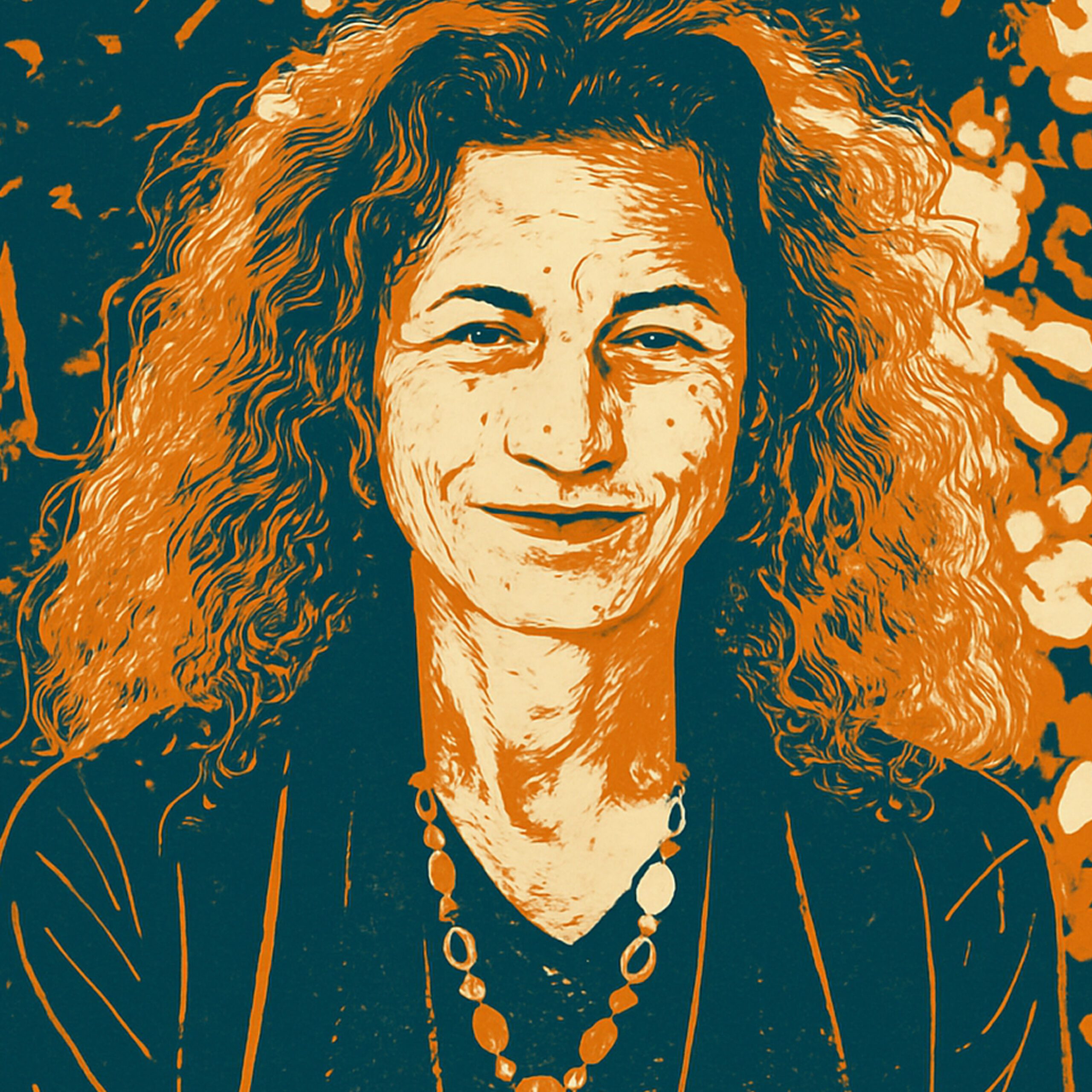
Episode 9 | October 6, 2025
Activist-theologian Alexia Salvatierra shares stories of bridgebuilding across generations, identities, and wounds. In conversation with Nikki Toyama-Szeto, she reveals how HIspanic communities embody a living gospel—vital, Spirit-led, and collective—where suffering becomes a source of liberation and the church learns again to accompany, share power, and dance toward renewal.
Ep. 9 | Alexia Salvatierra on Family, Bridgebuilding, and Power
/
“We’re familia. We’re a family, and we love each other. The Spirit flows between us back and forth.”
What if the pain we carry, the power we share, and the bridges we build are all the Spirit’s way of healing the church?
“We’re familia. We’re a family, and we love each other. The Spirit flows between us back and forth.”
Rev. Dr. Alexia Salvatierra—pastor, organizer, and academic dean of Centro Latino at Fuller Theological Seminary—joins host Nikki Toyama-Szeto for a luminous conversation about bridge-building, intergenerational love, and the transforming work of the Holy Spirit.
We don’t just find bridges—we become them.
Drawing from her decades of leadership in faith-rooted organizing, immigration reform, and accompaniment of marginalized communities, Salvatierra tells stories from the Puentes Collective of young Hispanic leaders navigating faith, identity, and pain.
Together they explore power sharing, healing from internalized colonialism, and the vocation of those who live between cultures. What if pain itself could become liberation’s instrument? What if the vitality of small storefront churches could reshape global Christianity? Salvatierra’s vision is not of a church to be rethought, but a church to be seen—vital, collective, and alive in the Spirit.
Rev. Dr. Alexia Salvatierra is Academic Dean of the Centro Latino and Assistant Professor of Integral Mission and Global Transformation at Fuller Theological Seminary. A Lutheran pastor, scholar, and community organizer, she co-authored Faith-Rooted Organizing: Mobilizing the Church in Service to the World. Her ministry has catalyzed movements for immigration reform and economic justice, including the New Sanctuary Movement, Evangelical Immigration Table, and Matthew 25/Mateo 25 Network.
Nikki Toyama-Szeto is the executive director of Christians for Social Action and host of Credible Witness. Her leadership amplifies marginalized voices and equips the church for faithful public engagement in pursuit of justice, mercy, and love.
“We’re familia. We’re a family, and we love each other. And so the Spirit flows between us back and forth. Even those of our young people who’ve left the church haven’t really left the church because we’re all family. We don’t leave each other behind. There’s intergenerational love in the midst of our conflict, and it’s that love that keeps us together. It’s that love that lets the Spirit flow. Nobody wants to leave anybody behind.”
“I killed people. How am I gonna judge you? All I know is the love of Christ. Christ does not love me more than you. Now, I’m confused about all this—I don’t really understand it. I don’t have a theological response yet that makes sense to me. I know what I was taught, and it would judge you, but I just can’t go there. You’re welcome in the church.”
“That very torn, code-switching place—between the big multicultural churches and the Spanish-speaking churches—is such a place from which you can heal the church. You can bring people together, you can translate, you can advocate. There’s so much you can do, so many possibilities that come out of the gift of who you are. What is our calling that makes the pain worth it? How does suffering become the cross that liberates rather than destroys? That’s what our young people are working on.”
Credible Witness is brought to you by the Rethinking Church Initiative. Hosted by Nikki Toyama-Szeto. Produced by Mark Labberton, Sarey Martin Concepción, and Evan Rosa
Nikki Toyama-Szeto: Credible Witness is brought to you by the Rethinking Church Initiative.
Alexia Salvatierra: So, um, I come from a family with no religious background, um, and an anti-religious orientation that my grandparents came to the US from Mexico and Russia, but they came from the anti-church traditions in those places, so they were socialists and that’s how I was raised. So I. Became a Christian in the Jesus movement.
Did you? I did. I did.
Nikki Toyama-Szeto: Dr. Alexia Salvatierra is a scholar, organizer, activist, and pastor whose faith is formed by community, kinship, and family that goes beyond blood relations.
Alexia Salvatierra: So we were in the middle of a fight, which happens. Between generations right now. But part of what I think is quite different about our community from the dominant culture in this society is that the differences aren’t driving us away from each other.
We’re familiar. We’re a family and we love each other, and. So the spirit flows between us back and forth.
Nikki Toyama-Szeto: Her activism and organizing in Hispanic church communities and multi-ethnic, multi-generational congregations is inspired by a holistic theology of belonging. Accompaniment and love that leads to justice
Alexia Salvatierra: and the story is positive.
It’s deeply positive, but there is this really deep pain. The pain is, it’s not that they don’t experience this pain. Mm-hmm. They, they do experience this pain, but. They don’t leave the church and they don’t leave the familia of the church even more than the structure.
Nikki Toyama-Szeto: I’m Nikki Toyama-Szeto and this is Credible Witness, a collection of stories and wisdom from faithful people wrestling with. And bearing witness two, the credibility of Christian life today. Each episode is an invitation to listen generously and courageously to one person, navigating social tension and moral complexity, negotiating doubts, struggles and fears, overcoming obstacles, and pursuing justice.
And living out the convictions of their faith. And every voice reminds us that the church is called to be a credible witness to Christ, a living reality of hope, justice, truth and love.
Alexia Salvatierra is known by Madrina. Or godmother. She’s been a godmother to many in the faith rooted activism space. From her time organizing communities in the Philippines to her work with the Borderlands in Southern California, she lives a life that testifies to the power of God’s invitation for us to live.
And to move in community. Alexia sees the world with unusual clarity. She’s a person who can be present to one story and at the same time hold a global strategy for community transformation. She’s deeply aware of power dynamics of the power of the next generation and of marginalized communities to lead, to move forward, and to guide us in ways that are reliable and trustworthy.
She sees her work as a work of accompaniment of journey alongside those who are working for God’s transformation in their communities. Reverend Dr. Alexia Salvatierra is the academic dean of the Centro Latino at Fuller Theological Seminary. As well as the assistant professor of Integral Mission and Global Transformation.
Her work is a beautiful mosaic of immigration reform, faith rooted organizing, cross-cultural ministry, and building vital holistic Christian community. Throughout her career, she’s played a central role in founding and convening communities for social justice, including the new sanctuary movement. The Guardian Angels Project, Mateo 25.
A bipartisan Christian network to protect and defend families facing deportation, the Evangelical immigration table, and the ecumenical collaboration for asylum seekers. In this episode with Alexia Salva Tierra, we discuss what it means to live the good news in small, marginalized communities of vitality and shalom, how each of us can become a bridge that leads to healing and reconciliation in our divided world.
And how we might be present to our pain and suffering, recognizing its power for liberation and building communities of justice and love.
Dr. Alexia Salvatierra, thank you so much for joining us. It’s a pleasure to be here. Can you tell me a little bit about the context in which your faith was developed and formed?
Oh, that’s a long story.
Alexia Salvatierra: So, um, I come from a family with no religious background, um, and an anti-religious orientation that my grandparents came to the US from Mexico and Russia. Mm-hmm. Well, the part of Russia that is now, sometimes now is now the Ukraine, but they came from the anti-church traditions in those places, so they were socialists, and that’s how I was raised.
That’s part of how my parents got together. Right? ’cause they shared that common perspective. So I became a Christian in the Jesus movement. Did you? I did. Then it was a long process to discovering that I was Lutheran and then to really identifying myself as Luther Costal because there’s no one in the Hispanic community that I know that’s not a closet charismatic if closeted also, um, the mixture that I carry of liberation theology and evangelical commitment.
So all of that together is who I am. And I also, I would say. That I have the Biblical Gift of justice. Yes. Which would take me a while to unpack, but it means that all the way through my relatively long ministry, I’m almost 67 and I’ve been in ministry in one form or another since I was 20. Over the course of that time, I really feel like God has called me to the intersection between the church and the world.
Nikki Toyama-Szeto: Yeah, and I feel like that’s some of the place where I’ve intersected with you as you have been living out the faith. In ways that are confronting different systems, participating in the strengthening of communities. Can you talk a little bit about how that has worked in your own development and formation?
Alexia Salvatierra: Sure. And I wanted to say first that I was formed. I am a very collective person. Mm-hmm. So I, before I talk about what I have done, I would always talk about how I was formed. Mm-hmm. That I was very much formed in the first sanctuary movement for Central American refugees and in the farm worker movement.
And then later I was a missionary in the Philippines and I was part of the pro-democracy. Campaign that was successful against the dictator, Fred and Marcos. But then I have also been involved in leading teams in the Faith Community Labor Coalition for Economic Justice. We have a book called Faith Rooted Organizing that came out of that, that really is an, is an alternative model to faith-based organizing.
That is more deeply rooted in our faith. I’ve been very involved with the homeless and very involved with immigration. So I was one of the co-founders of the new Sanctuary movement, one of the co-founders of the Evangelical immigration table of something called the Guardian Angels, which in the Lutheran context involves.
In court advocacy for unaccompanied migrant children and something called Matthew 25 Mate ko, which brings immigrant and non-immigrant churches together to re, to accompany people facing potential deportation. So very involved in the immigration arena as well. Throughout my life. The common thread over all the years is that I’m a pastor, right?
That I’m not just a doctor of the church, I am a pastor, and maybe I’m more fundamentally a pastor than anything else. So that’s how I come at things.
Nikki Toyama-Szeto: There’s a growing awareness of the rampant disconnection of life, the social media technology that promised friendship, connection, community, and rich, joyful relationships is struggling to deliver on those promises, leaving us strangers to one another, alienated in a twisted irony that results in profound loneliness.
What would it be to recover the concept of a bridge? And what would it look like to become Bridges for one another as an act of responsibility and accountability to stay connected? Alexia described her bridge building work among Hispanic millennials, younger generations committed to leadership in social justice Today, these leaders of the Puentes Collective Puente being Spanish four.
Bridge want to be the very mechanism for connection with each other, for each other. Not to simply find a bridge, but to become the bridge
Alexia Salvatierra: in the Matthew 25 Cinco movement of immigrant and non-immigrant churches working together. It was very clear early on that was really hard to do unless you directly engaged.
Who we called Puentes Bridges, who are bilingual, bicultural young people with a foot in each world that they could make sure that the relationship worked. And this is immigration work? Yes. In the last
Nikki Toyama-Szeto: 10 years? Yes. Okay.
Alexia Salvatierra: Yes. And so we sort of helped to catalyze as Matthew 25 esko the development of this Puentes network and Puentes Collective.
Um, and that sort of one box. The second box is we utilize the Puentes network. We’ve utilized them now twice in research. On Latinx, millennials and theological education, and then on Latinx millennials and revitalizing the church. And as part of that, we organized a kure, a summit last summer with about 50 Latinx.
Millennial and some generation Z, some on the edge of generation X that were direct saw themselves as directly involved in revitalizing the church and in many of them in leading networks. And so they came together to share and to, to discern what God is doing to support each other. So the particular stories I’m telling are in the context of this larger frame.
That we have been looking at this community and at what’s going on with them and what God is doing in them and through them, through these bigger pictures. We also just recently, I forgot, completed a study with the Full Youth Institute looking at youth ministry in the larger Hispanic community and including youth ministry led by these folks.
You know, big picture. Um, three stories that I think I would like to share. The first story has to do with the Puentes. The Puentes are a certain percentage of the board. We are very clear in Matthew 25, Mateo Vientecinco, about structuring free justice. And so making sure that they really have power, not just voice this, this is the
Nikki Toyama-Szeto: bridge building generation.
The elders deciding right, but bringing them. Bringing them in as decision power with them. Yeah.
Alexia Salvatierra: So we were in the middle of a fight, which happens between generations right now. But part of what I think is quite different about our community from the dominant culture in this society is that the differences aren’t driving us away from each other.
We’re familia. We’re family, and we love each other. And so the spirit flows between us back and forth. So this story is we were having a fight. Around a push by Black Lives Matter. To require this during the pandemic to require that 51% of all economic development funds would go to black owned businesses.
Nikki Toyama-Szeto: And this is in the Los Angeles Metro? Los Angeles
Alexia Salvatierra: metro area. Okay. Southern California. And the younger members, the Puentes of our. Board and steering committee really wanted us to support that. But what was happening in our community was that the PPTs, the loans had just come out and with them came a legislative requirement that if you had anybody in your family who was undocumented, who didn’t have a social security number, anybody, and they could figure that out, that you wouldn’t get a.
Nikki Toyama-Szeto: Anyone in your family? Anyone
Alexia Salvatierra: in
Nikki Toyama-Szeto: your family. So it’s not just the person who’s being Oh, not the person responsible. The person could be a
Alexia Salvatierra: citizen. Anybody in their family, they wouldn’t get If their spouse, yeah, if their spouse or Right. They wouldn’t get, I don’t know how wide that would be, but certainly spouse or child.
Right. So we knew that and we all knew that, that if 51, that our people had absolutely no access to, to help at that point. ’cause everyone. It has proximity because everyone has proximity, right? Not everybody, but most of us. Yes, yes. And so we were like, what, why would 51% of those funds go to the black community when our people have no access to PPTs?
Like, you know, so this was the older generation saying that, the younger generation saying, no, we’re intersectional and you know, we’re, we’re, we’re anti-racist. And, and so in the middle of all that, one of our. Our leading Puentes said, well, I guess that the, like Moses, like the generation just has to die off in the desert before we can go into the promised land to your face.
And so I said to her, you know, Miha, you want me to die in the desert? And she went, oh. She said, no, me. No. Meina means godmother. Not, you want you to die in the desert. But no. But really that sense that we love each other. We love each other. Yeah. Nobody wants to leave anybody behind really. Right, the intergenerational alum in the midst of our conflict, right, where even those of our PE young people who’ve left the church haven’t really left the church because it’s all family
Nikki Toyama-Szeto: shared power is a beautiful thing. Exemplified and typified, of course, in Christ’s incarnate example. But Alexia’s working for sharing a power that extends beyond merely having a voice speaking up is often necessary, but not sufficient for exercising power.
Alexia Salvatierra: So my second story, the Puentes managed to bring together people with all different kinds of relationship to the larger institutional church.
And that is not unusual, Nikki, either in our community, that we, we are very relational. Mm-hmm. And so we can bring people together with very different ideas on the basis of relationship. Very like a broader spectrum. A broader spectrum. Each of these, one of our Puentes who was at the time was in college, younger, you know, was.
Had come out as queer. Okay. And was feeling very separate from the institutional church. Wanted very little relationship to, it. Wasn’t even quite so sure where she was at with Jesus. And so then she decided over a summer that she’s an artist, that she really was looking for a good art project to get involved with him, be an intern community art project.
And she found out about, and I won’t use her name, but I’ll use the name of the pastor because he does this work very openly. And I do wanna, I wanna give him Ms. Props gets him amazing. And he’s also generation X, um, millennial, right on the edge. So Ruben Nuno, um, was grew up in a Vida Loca family, which means generations in the gangs and in East la and he became a Christian and he.
Started this ministry, Pentecostal ministry in Echo Park area that primarily focused on people coming outta prison. Like most of the people in the ministry were OGs coming out of coming outta the gangs, coming outta prison. And he. It was a very Yes. Can you define for us how you’re using OG in this clinic?
Oh, it’s an old gangster, right? And he’s, that means somebody who’s come out of the gangs, right? And so he has this very holistic church, right, with all kinds of ministries involved in the anti-gentrification stuff and involved in, you know, local youth work involved in all kinds of things. But one of the things that he was doing that attracted this young Puente is.
He, instead of trying to keep the gangs from doing graffiti on his church walls, he invited the gangs to do graffiti on his church walls. But he asked them to bring their best game. Oh, to do beautiful graffiti. He kinda asked the best graffiti uhhuh like graffiti that was socially conscious. That was beautiful.
That, and then he brought in known graffiti artists to do workshops. No kidding. Kidding. With any of them that wanna do, okay. So this young Punte was just so excited about that. Like, yeah. Like, wanted to go and went and said, I mean, I’m excited about it. I’m not an artist. Can I, you know, as a young artist, can I be an intern with you?
Yeah. And he said, well, yes, but you have to go to our church. You know? Well, she had grown up in the Hispanic church and so she was, you know, okay, but I, it’s not gonna kill me to go to church. Right? Yes. Yeah. Yeah. So she starts going to church. And her heart is really won by what’s happening there. The fact that people who have no hope come out with hope.
The fact that people whose lives are so broken and who’ve gone through so much and just been so destroyed by our society, find healing. Wow. And they find Jesus and they find healing. Yeah. And so she’s just. The joy and the, you know, refuge, but also the commitment, social commitment. She’s like, oh, I think I wanna come back to the church.
Right? I wanna come back. Well, her partner who’s trans is very, and white is very threatened. You’re gonna go back into the Hispanic church, I’m gonna lose you. So her partner starts coming to church and her partner is very moved by what. They are seeing there, right? And so in sort of this internal conflict, their partner says, well, we gotta come out.
To ribbon. And I’m terrified ’cause I’m of course so happy as you know, somebody who’s watching this, someone who has happy eyes and I’m like, oh, this is gonna totally blow it. You know, they’re Pentecostal, Latinx folk, you know, Spanish speaking, but this is gonna blow it. And you know, they as a couple go to ribbon and they come out and they say, so are you gonna judge us?
Ruben says, I killed people. How am I gonna judge you? All I know is the love of Christ. Christ does not love me more than you. And he says, now I’m confused about all this. I don’t really understand it. He said, I don’t really like, have a theological response yet. That really makes sense to me. I know what I was taught and it would judge you, but I just, you know, I just can’t go there.
And he says, you’re welcome in the church. And then, um, and then you know, the head of the Bible study that they were going to. Who is an, who is an ex-con and very much saved by his Pentecostal faith. And very upset. You know, he says, this is an abomination. They can’t be here. And so Ruben sits Martin down with them and he says, look, we are all fami, Martine, you are not perfect.
You know that. He said, we just have to live together and God will work it out. And his friend says this, their trans partner says, I wanna be baptized. Wow. So that’s a story to me about, about the vi the, the vital, the vital nature of our communities, right? That our communities are alive and Christ is present in vital ways.
And, um, in fact, there’s a sort of funny little post cri, a little sad, funny postscript, is they go back to college and they look for a church. And of course. They know that the Hispanic Pentecostal churches in their area are not going to accept them. They’re in, you know, Western Massachusetts and, um, but they see a church with a rainbow.
And so they, it’s a United Church of Christ and they say, oh, the book, they’ll welcome us. And they go in and then they call me afterwards. Mm-hmm. She calls me the Puente and she says, I’m so confused, madrina, can you clarify this? And I said, what is it? She said, well. They didn’t really talk about Jesus. I mean, they sort of lightly talked about Jesus, but there wasn’t any sense that Jesus was present, like no one got healed.
You know? No one, no one just opened their heart and everything poured out and got healed and like that didn’t happen. Vitality of she said, she said, I think that that was like an old political club. It was just said, it was like a political club, but it was a political club of old people, old white people.
Why would I want that? If I want a political club, I can have one at school with young brown people. What that, so just say it. That’s an important postscript to that story.
Nikki Toyama-Szeto: We are all familiar kin. We just have to live together. God will work it out. Alexia shared with me a bit more about the contours of the community informed by collective justice mentality.
Alexia Salvatierra: The third story I wanna tell is I wanna. Is very different. And another Puente actually. And this Puente he’s named, I can give his name. I think you wouldn’t mind at all. ’cause the name is important. It’s the Molina family. So this is re Rene Molina Jr. Is the Puente. But I wanna talk a little bit first about re, Rene Molina S Senior that Rene Molina Sr.
Escaped from Central America during the wars and he was not a Christian. He crossed the border undocumented. And he ended up coming to Christ in a very, very conservative denomination, a lim, where in many places the women still wear the headdresses and the long skirts. And, and this is in kind of the Southern California, Southern California, but he rises to leadership.
He’s a born leader and his, the little church he has, has 10 people. And by the time he’s done doing his ministry, it has close to 3000 people. Immigrants South la and then he finds his way to Fuller, which is a whole other story. And he goes through a lot of transformation at Fuller. Uh, I was part of some of that transformation.
And he ends up with a new, much broader vision of ministry, which results in him calling his wife a pastor, which results in them being thrown out of the denomination and parting ways. And, but he, you know, he rebuilds and he’s got this church doing all these amazing things and then his son, Renee. Decides that he’s gonna do an English speaking ministry and it becomes a multicultural ministry right away, right?
Because it’s English speaking and the area is black and brown. So he is got a bunch of young, as Rene Sr. Put it to me, a bunch of young people with tattoos, but you know, all kinds of young people and, and about 300 young people. I mean, it grows really quickly initially. And then his sister, Marcella.
Marries Jose and they wanna start a community development corporation. And Renee, senior’s supportive of that. But initially there’s a lot of conflict, right? About so many things. Okay? But they hang together. They stay in there. So you know, they have conflicts over sort of conservative, progressive questions, right?
All of the questions like, um. Rene Molina Senior is very involved in the immigration struggle. So he’s, he does understand the larger vision of Integral Mission. He’s committed to it. But you know, Rene Junior wants to do Black Lives Matter stuff and he wants to, you know, and he wants the L-G-B-T-Q-I-I question is right out there.
And you know, he wants to deal with every controversial issue in the church. Oh, I see. Yes. You know, so the
Nikki Toyama-Szeto: orientation, but also kind of their issue
Alexia Salvatierra: that they’re engaging with way and this, I think some of it is even. Some of it is different, but it’s just the church being open. Yes. In some very deep we deep ways to the world.
Uhhuh, you know, and, and Rene Molina does believe in a relationship with the world. He doesn’t wanna isolate his church. Mm-hmm. But he’s much more cautious about that relationship. Mm-hmm. And what’s of God and what’s not of God. And Milley Junior is much more sort of open. Okay. And so there’s a lot. And so Marcella would be too.
So there’s a lot of that kind of conflict. And then, but then they, they keep working it through because we love each other. Right now, they’re at the point where the whole ministry is taking off, and I did an interview with the two of them for, uh, for Fuller, and I was in tears over and over again at the depth of mutual appreciation that, you know, Rene Molina Jr.
Says, you know, I don’t agree with my father in a lot of things. But he has the fire. He walked through fire and the fire of the Holy Spirit is in him, and it burns consistently. And I warm myself at that fire. I draw inspiration and strength, and he has spiritual stamina and I draw that from him. And Rene Sr.
Says he can do things. He says like the verse where Jesus says, we’ll do things more than he did. You know? Rene Junior and myself, they can do things I could never do. They can go talk to the manager of sco, they can get furniture for our community. They can talk to the principal of the junior high. They can create joint youth programming.
They can do so much, you know, to bring Shalom to our community that we could never do. Uh, you know, they just have this mute. Profound excitement about each other’s ministry and about the way that they can work together.
Nikki Toyama-Szeto: These are stories of hope and connection and positivity, but we can’t ignore the fact that they emerge from pain sometimes ago. And it’s that hidden pain that so many of us are dealing with. The temptation to hide the pain. It’s seemingly always around the corner for church leaders, pastors, community organizers, public figures.
They’re supposed to be in control after all, but we’re learning that honesty. And openness about our wounds is another way to re-inhabit our power and agency and work from trauma to healing, integration and resilience. And Alexia explains that it’s all a work of the Holy Spirit, but we’re learning that honesty and openness about our wounds is another way to re-inhabit our power and agency and work from trauma to healing, integration and resilience.
And Alexia explains that it’s all a work of the Holy Spirit.
Alexia Salvatierra: One of the things that we found when we did the Kumbaya the summit, was that not only some of them are in pain, like bridges getting walked on, you know, like this very complex identity and all the issues that go with it. All of them are in. All of them are in deep, profound pain around trying to hold together these multiple worlds and multiple identities in the midst of racism and discrimination and everything else that goes on in this country, and the polarization, trying to hold it all together and.
Was that surprising
Nikki Toyama-Szeto: to you to find? It was
Alexia Salvatierra: not surprising to me that, I mean, a bunch of the Puentes are in that space and are really working hard on, it’s very exciting. They were involved with another study that we did on trauma and resilience for Latinx millennials. So they’re working on really exciting ways of pulling from their roots and also the pulling from their roots too, you know, pulling from their roots too.
And then combining them in interesting ways with newer options and other options to try to create healing because they, so I knew that, yeah, the Puentes worked very actively on trauma and resilience. Mm-hmm. But what I was surprised by is even the most successful young Latinx pastors and pastoral leaders, you know, just building these thriving communities and they’re in agony.
Wow. So I just want, I felt like it was important to say that because I’m telling these very positive stories. Yes. And the story is positive. It’s deeply positive. But there is this really deep pain. The pain is, it’s not that they don’t experience this pain. Mm-hmm. They do experience this pain. Mm-hmm. But they don’t leave the church.
Mm. And they don’t leave the familia of the church even more than the structure.
Nikki Toyama-Szeto: Yeah. Sense as to, so it sounds like they’re trying to navigate their faith in a community and there’s all these other pushes and pulls. Yes. And that’s where the pain is coming from. Yes. And the pushes
Alexia Salvatierra: and pulls Yes. About both who they are and how they respond to everything happening
Nikki Toyama-Szeto: in our, in our world.
Whether that’s the way that God might be showing up to them in that pain. Or practices or, or things that are helping them navigate that pain? Absolutely.
Alexia Salvatierra: Absolutely. Um, I think that there, the Holy Spirit, I would say that even the most alienated sort of from the church, and I do need to say that. Puentes are often in multicultural churches.
They’re sort of in the Spanish speaking churches. They’re sort of at the margins of both. And so part of what we work on a lot is identity being vocation. Mm-hmm. Means that they are to be, they’re in a critical position to revitalize both sets of churches, but we, but they typically bounce around between multicultural churches and um, Spanish speaking churches.
So I just wanna give that context. But they’re doing a lot of work. On, like I said, trauma and resilience, but that’s all. Integrating the Holy Spirit. We, there’s quite a bit of documentation on this, so I’m, it’s not just me, it’s not. I wouldn’t say quite as the Lord, you know, you say the Lord, not me. Me, not the Lord.
Anyhow. But I would say that we have a very strong experience throughout our community at all generations and all levels of the Holy Spirit, and we really trust that. And that helps. Let me just say that. That helps. So then it’s figuring out how is the spirit part of personal healing, social healing? How does the spirit work through culture, through the arts?
Right. What are the various ways we experience and manifest the spirit? How does, so how do we go ancestral and then combine that with, you know, more recent Pentecostal traditions, how, you know, so there’s this, it’s very live and complicated and a lot of people are working on it in that generation, in our community.
Nikki Toyama-Szeto: I wanted to hear more about Alexia’s comment on identity and vocation, who you are. What you’re called to Alexia shared about what it means to wrestle with this question in the communities where she’s embedded. Her way of developing this idea was to come back to the question of pain, to know ourselves and our calling might go straight to the heart of how we work.
With our pain and suffering for Alexia, that has everything to do with using that trauma and experience of suffering as an opportunity for liberation and freedom and flourishing that comes from healing.
Can you see a little bit more about identity as vocation
Alexia Salvatierra: is? Well, when I was talking earlier about. The Ententes being on the margin of both the big multicultural churches and the Spanish speaking churches. Mm-hmm. Like the Spanish speaking churches don’t trust the next generation. You know, the trust that has happened in the Malino family has been hard one, lots of wrestling together.
Mm-hmm. There’s lots of love, but there’s necessarily lots of trust. And then of course the big multicultural churches don’t value. By and large, you sort of ignore them, don’t really utilize all their gifts, don’t trust them. Mm-hmm. And that’s so painful. ’cause they have so much to give. When we did the research that came up over and over again, we have so much to give and they don’t want it ’cause they don’t trust us.
Mm-hmm. You know, so painful. Mm-hmm. But the sense that, that very. Torn that very code switching torn place is such a place from which you can heal the church. Such a place from which you can bring people together, you can translate, you can advocate. There’s so much you can do. Yeah. So many possibilities that come out of the gift of who you are.
And I think that, I think many of them are working very actively on that. Like what does that mean? What is our calling that makes the pain worth it? So in this moment, in this place, how does it become the cross? Right. You know, there’s this tension in Latin America around how you deal with suffering.
There’s Domo, which is, you know, seeing suffering is ennobling. And that’s very criti, that’s highly criticized by people doing liberation work because it could create passivity. But I think it’s, I don’t have that perspective on it. I think that when people don’t have any options, it’s essential to be able to transcend and to noble your suffering.
It means that you don’t allow your suffering to destroy you. Our grandmothers, you know, they didn’t have a lot of other options, right? Yes. Yeah. But you can get stuck in doman or pathos is the use of suffering. Forward liberation. And so I would say that our young people are working with Orthopathos. What is the use of suffering for liberation?
How does the suffering inform, how does it inform what needs to be changed? How does it strengthen you for what needs to be changed? How does it em create deeper empathy? Because going back to how are young people dealing with the pain? Community, holy Spirit and community. ’cause that’s where you experience the Holy Spirit is in community.
We’re really big on ecstatic worship. Mm-hmm. You know, we are. And it’s because it’s a release. You come, you dance and sing and you know, let yourself go. You let yourself go into it. That praises medicine for the soul. Yeah. You know that. But you do it in community. Yeah. It’s not about being alone by yourself in contemplation.
It’s about being in community and the Holy Spirit who rushes through the community and healings happen and you know, so our young people take do that. They take advantage of that.
Nikki Toyama-Szeto: I’ve been so encouraged and surprised and challenged by the question of rethinking Church, that phrasing and concept lands. In so many different ways as different people bring their experiences of Christianity to the questions we’re exploring in this podcast. The segment of the church Alexia works with does it so much need to be rethought, as it needs to be seen and accompanied, acknowledged for the amazing life and vitality that is already present there that leads to new words that can make new worlds reforming.
Reshaping, rebuilding.
What is it that you see that God is doing in this moment and how do you think that we should respond?
Alexia Salvatierra: So, I, I ache a lot about how invisible our community is to the larger conversation in the gates that the word, the little phrase, rethinking church. It, it, it’s a little provocative for me. Because I’m not sure our church need to be rethought.
I think they need to be visible, and I think they need some help with understanding the challenges that were in the middle of and the best way to confront them, uh, and with gathering best practices and exchanging them. But they’re vital, vital churches. They are not dying churches. They’re not churches that are so entombed in an old paradigm that they have to be completely rethought.
I think that we need help processing what God is doing in some new ways. But this sort of idea that somehow there needs to be a Rethinking Church project to save our churches. That our churches are being saved with all the pain and all the anguish and all the incredible transition and, and all the young people who are sort of lost and don’t feel connected anywhere, even though they’re part of, they’re familiar, but they can’t fit all of themselves and their familia.
Then they’re in these political contexts and they can’t fit their Christianity in these contexts. And you know, there’s a lot of pain and a lot of struggle, and a lot of work to do. And I’m not saying, oh, we’re all good. I’m saying there’s life here. And the, there’s all kinds of new ideas and it’s popcorn.
Uh, it doesn’t need to be rethought. It needs to be accompanied. That’s a word that really matters to us in our community, accomp in the political movements. But it’s, you know, we need. We need to accompany people who, from a diverse set of places, and to be accompanied as we, as we ride this wind of the Holy Spirit to figure out where it’s going next together.
So it’s not that there isn’t a similar work to do, it’s that I really wanna make sure that that work, uh, that, that our vitality is recognized. And there was a recent, I was, I felt so vindicated. There was a study that Lifeways just did on the Hispanic church and it just. I’ve had people who are not part of our community say, oh, Alexia, you know, what you’re talking about is 0.0 0, 0, 0 0 0 1%.
It’s like, no, it’s not. It’s actually the majority. And uh, there are some people who are caught up in the white paradigm and they’re dying. But that’s a small percentage, right? Like, yeah. You know, there are seminaries that are dying in Latin America. We’re working on a partnership with a seminary that is 8,000 students.
You know, and they’re interested in the holistic mission paradigm. So it’s not, you know, it’s just not the same picture. And I really want to be our people to be visible in this process so that we can participate fully as we are
Nikki Toyama-Szeto: Alexia’s tradition of Solitar and justice. With the poor, the migrant, the farmer, the Puentes, the storefront church, and the emphasis on the vitality that’s there. It brought us to the question of what we might learn from smaller congregations with an outsized expression of life and community and shalom and wholehearted joy.
She return to the issue of power sharing. What do we miss? When we marginalize these smaller, vibrant communities that lack the worldly power that other churches enjoy
in this idea of accompanying of ros, um, what are some of the questions that are emerging?
Alexia Salvatierra: If there’s a larger dialogue, um, that would be most useful for us, and I believe, I believe in that larger dialogue. Um, I think we wanna talk about power sharing.
Nikki Toyama-Szeto: Mm.
Alexia Salvatierra: You know, I just finished this book on the base Christian community movements, which I was part of when I was young.
They were really strong in the seventies and eighties. I was part of them in the Philippines. I, but I was also connected to them in Central America, in the base Christian communities. There was radical power sharing and it was very effective. And in some ways there’s something natural about that for us because we’re very collective.
Mm-hmm. Right. We’re fluid, we’re collective, but. It’s also the biggest problem in our church because there are also two things. I think there are traditions of mamo and there are Tramo, which is little dictators, but both of those for me. Our internalized colonialism. So there’s this, there is this study from Hoffstead that everybody sort of in the missiology field takes as gospel.
It was a longitudinal study through IBM, but it looked at all these different fact factors to compare culture. And they talked about high power distance and low power distance. Mm-hmm. And they say that all of the global north is low power distance and all of the global south is high power distance. And I’m looking at that, I’m like.
Who colonized who, wait a minute. Does that make any sense? As but what? But what I realized is what is true? Is that the internalization of colonization creates this, you know, you’re abused, you abuse, you’re an abused child. You become an abuser. Yes. Right. That creates these profound patterns of power over in our communities.
So we have power with almost instinctively, because we’re collective and fluid. Mm-hmm. But then we have power over that’s really embedded. That comes out of the wounds of colonialism and then also our. Faithfulness. I mean, it’s ironic, our law, family, loyalty to the people who brought us Christ, if we’re Protestant, you know, people from the North who brought us Christ, you know, and we’re so loyal to them and to their, the loyalty is a collective process, but it then makes us, makes whole sectors of our community like so conservative, so unwilling to share power and so frightened of sharing power so frightened that it would contaminate and.
Now even our hierarchies are what I think of as warm hierarchies, not cold hierarchies. Mm. They can be fluid, but they can be cruel. And so I think we really, this generation that’s emerging and this church that’s growing and merging and transforming, really has to understand. How we share power, how we, how we heal these internalized wounds.
Nikki Toyama-Szeto: While it’s a sobering thought, internalized colonialism, if you’re abused, you abuse. It’s a cliche for a reason. Hurt people. Hurt people. It’s only in the divestment of certain forms of power that these wounds might be exposed. To the healing work of the Holy Spirit that leads to a resilient strength and interdependent vitality.
Alexia Salvatierra: So I think, I think that’s one that I think we really want to be in international dialogue about, that we really think that’s a place where we’re trying to rethink. Although the word think is very intellectual and we really, I think we would see everything as much more integrated than that, but it works as, it would just use it as a word.
What would, would you, would you use instead? Well, people don’t wanna say reform because it’s reform, but I think of reform. Reform, uhhuh, that the church is reforming. Changing the shape of, changing the shape of, right. Yeah. Changing. Changing. Yeah. Chaching the shape of the new wineskins for the wine. You know, new wineskins for the wine is one of these new wineskins that we’re all have this international dialogue about what do these new wineskins look like and how do we move into them as well as how do we dance into them as well as possible.
In the spirit. I feel like, I think we should be red. Real dancing church. Yeah. You know? Mm-hmm. Re, re recreating, re like creating says we’re not that nothing good is happening. And I wanna say, yes it is, but it’s happening. How do we guide it? Reshaping. Reshaping, you know, there isn’t quite a word that’s perfect for it, um, that really recognizes what the Holy Spirit is already doing.
But then our active role is partners with God. Our inter, I love the project around the international conversation. We’re all in conversation together from different communities of different stances about how we can midwife the new life that God is bringing together. So I would say we can use help figuring out these questions of how you share power.
I think the other big issue is around intersectionality, and I think it’s an issue for all of us. Which is that, um, what, what unites us, and I wanna talk a little bit about our contribution also to the whole mm-hmm. Around questions of unity, but which I’ve been sort of threaded through all the conversation, but I wanna tell one more story about it.
But, but I think that the challenge with intersectionality is becoming so broad and superficial that
Nikki Toyama-Szeto: you’re not really accomplishing much. And can you, and can you unpack just an align or two intersectionality and how it’s being used?
Alexia Salvatierra: So the modern, uh, Reverend James Lawson Jr. Who is one of my mentors, amazing man.
Um, he was Martin Luther King’s theologian of the Theory and Practice of Non-Violence in the Civil Rights Movement. He says the 21st century is the age of multi, multi everything. The problem with multi everything is, oh, I think in stories, you know, Leroy Barber and I. We were called upon to do a workshop at CCD and Black Brown relations, and it was really good for us to do that because we were really angry with each other because Ferguson jumped off at the exact same time as the surge of the border run, the unaccompanied minors.
So he was like, where are you when we need you? And I was like, where are you? And we need to, but the fact is we had so much work to do in our own communities. They just, and we all have families and we all have churches, and we all have jobs and whoa. You know, and let’s multiply that by multi, you know, a lot of progressive churches are, do so little that has impact because they’re trying to do everything.
Nikki Toyama-Szeto: This is that thinness that you’re talking about, that thinness? Yeah.
Alexia Salvatierra: See, it’s very superficial. If we try to do everything, it’s just, we’re just limited human beings. Now, the body of Christ as a whole has to do everything. None of us individually are Christ and even our little communities, none of us or our, or our ethnic communities or whatever, we can’t do it all.
And every person can’t do it all. So how do we choreograph this? Going back to dancing, and I was a dancer when I was, how do we as a professional dancer, I was gonna say, that doesn’t surprise me. Yeah. So how, how do, how do we, um, find models? For how to know each other in all of our differences, how to care about each other in ways that are authentic, and also how to do work that is deeper and more powerful because you, you can’t do everything, not check the boxes work.
Yeah. I just can’t do everything. Yeah, so I think we’re all trying to figure that one out, and that’s a topic that I think we all need to
Nikki Toyama-Szeto: spend a lot of time on. Alexia Salva, thank you so much for joining us on this conversation. You’re welcome, Nikki. Thank you so much for inviting me.
I was grateful that Alexia Salvatierra took us on this journey with her, this journeying work that she has this accompanying of people. She was pointing out the things on the side of the road that we should notice the beauty of an interdependent community. The vitality in life that I sometimes missed because I might have economic biases about which communities actually do contribute or have something to teach me.
She showed me about the amazing work that Puentes are doing and also the role of a wise and kind godmother who is grateful for our walk and eager to learn more.
Credible witness is brought to you by the Rethinking Church Initiative.
Produced and edited by Mark Labberton, Sarah Martin Concepcion, and Evan Rosa. And I’m your host, Nikki Toyama-Szeto. Thanks to Fuller Seminary, Christians for Social Action and Brenda Salter McNeil for sharing her book title with our podcast.
Special thanks to all of our conversation partners in the Rethinking Church Initiative and Network, both public and private and above all. Thank you for your own courageous listening and your own credible witness to the gospel.
For more information, visit crediblewitness.us.