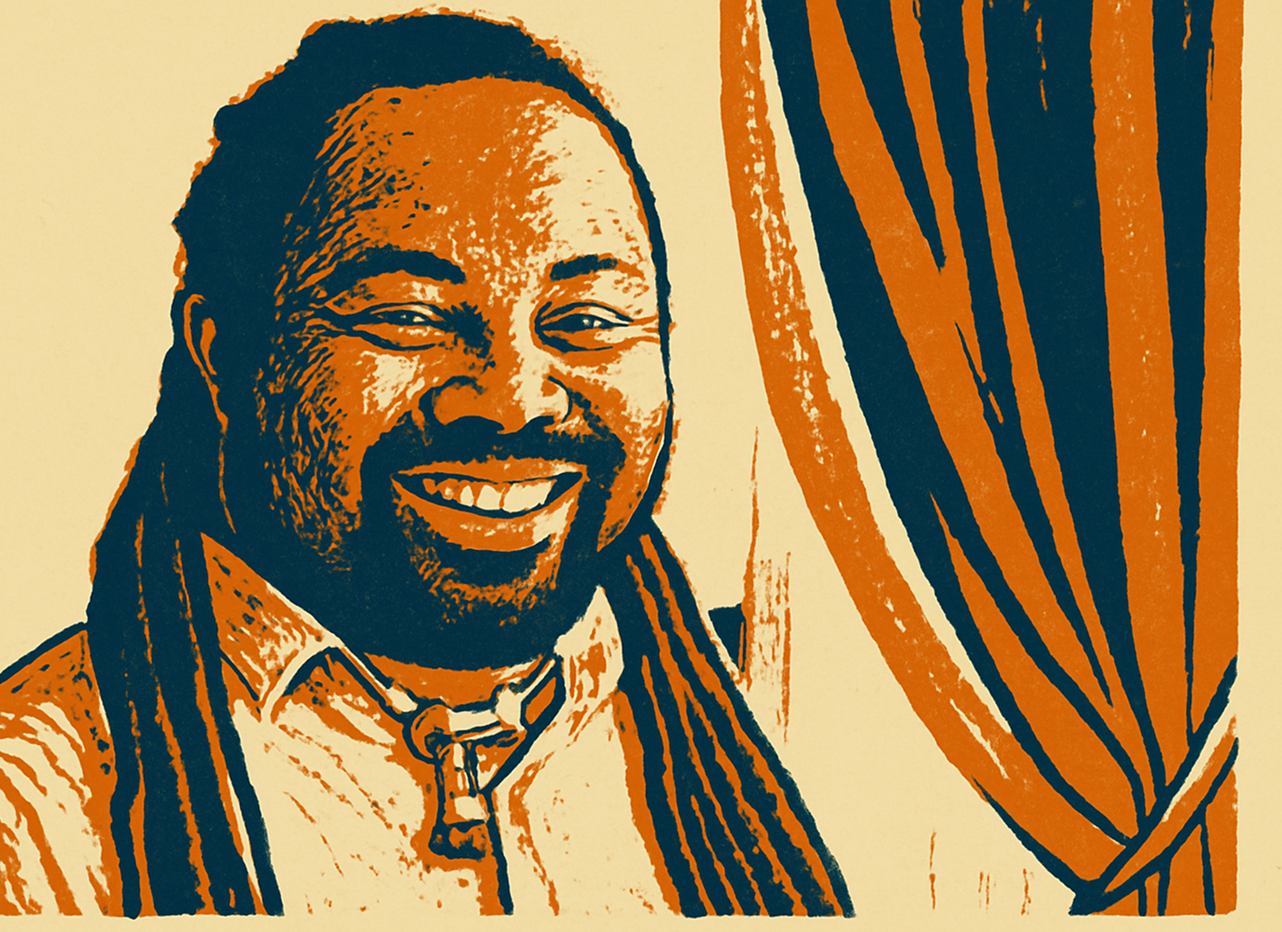
How might God use the rediscovery of one’s cultural and ancestral roots to form a more faithful, whole-bodied expression of Christian worship and identity?
You need to press into the fullness of who God made you to be.
In this episode, Kenny Wallace shares his experience as a Black man reclaiming the fullness of his identity, incorporating his heritage as a son of a Choctaw mother, a Pawnee father, and ancestors who endured enslavement. Kenny describes how recovering Indigenous ceremony, African American resilience, music, and embodied worship has become central to his Christian faith. Through stories of ancestral songs, naming traditions, feathers found on prayer walks, Revelation 21’s vision of worship from every nation, and his ministry at Mosaic Intercultural Church of London, Kenny paints a vivid picture of what it means to worship with all five senses—mind, body, culture, and community. His experience challenges the truncated, cerebral forms of Western Christianity and opens wide the invitation to worship with the fullness of who we are. Grounded in scripture, guided by Indigenous Christian elders, and animated by hope, Kenny offers a compelling witness to God’s reconciling work across cultures and generations.
Key Moments
- “My ancestors were brought over from Benet and Togo as slaves to the US, and they were told they couldn’t speak their language or play their music. But still, in spite of all of that, there was a vibrant faith and hope that God would carry us through.”
- “There was this resilience that came through the trials and tribulations of slavery—this connection to God and His power and His provision for us—that was passed down through the generations.”
- “You need to press into the fullness of who God made you to be. You need to press into what it means to be an African American and a Choctaw man.”
- “When I read Revelation 21 and understood what was going on, my heart was like: this is why You’ve written my story. This is why You’ve had me go through this path to understand who I am—because You want this in worship.”
- “There are aspects within my culture, and within your culture, that need to be used to glorify God. You need me, and I need you.”
- “Liturgy is the work of the people. If you come in here, you’re going to work—you’re going to worship the Lord with the fullness of who you are.”
About the Contributors
Kenny Wallace is a musician, dancer, worship leader, and scholar holding a doctorate in worship studies. A man of African American, Choctaw, and Pawnee heritage, Kenny’s ministry centers on embodied worship, intercultural reconciliation, and honoring Creator God through the fullness of cultural expression. He serves at Mosaic Intercultural Church of London in Ontario, teaches across North America, and brings gifts of song, dance, prayer, and artistry wherever he travels.
Nikki Toyama-Szeto is the Executive Director of Christians for Social Action and host of Credible Witness. She writes and speaks globally on justice, discipleship, and the credibility of Christian public witness. Through CSA, she equips leaders and communities to engage the world’s complexities with courage, humility, and hope.
Episode Outline
- Kenny recalls ancestral spirituals: “hold on just a little while longer… everything will be all right.”
- Embraces African American, Choctaw, and Pawnee ancestry as a gift from God, reclaiming what racism tried to erase.
- Explains “Creator” as Yahweh, the Supreme Being present in daily life and creation.
- Receives a prophetic call: “press into the fullness of who God made you to be.”
- Confronts resistance: “we’re just playing Indian… you need to go somewhere else.”
- Rooted in Christian Scripture as the guide for discerning what honors God.
- Guided by Indigenous Christian elders: Terry LeBlanc, Randy Woodley, Casey Church, Richard Twiss.
- Revelation 21 reshapes his theological imagination—every culture brings its required “tribute of worship” (doxa).
- Family moves from caution to pride, celebrating Kwanzaa and learning Indigenous practices.
- Embodied worship activates all five senses: sacred medicines, dance, movement, sight, sound, and smell.
- Critiques Western worship’s truncation toward “just the mind” and sermon-centered services.
- Describes Mosaic Intercultural Church’s full-participation liturgy: “the work of the people.”
- Demonstrates reconciliation embodied in his own ancestry—Choctaw slaveholding history reconciled with African American lineage.
- Witnesses cross-cultural joy: Dutch CRC congregants dancing behind him in worship.
- Ends with a Cherokee morning prayer-song inviting all creation into worship.
Indigenous Christian Worship And Cultural Identity
- Kenny recalls ancestral spirituals: “hold on just a little while longer… everything will be all right,” grounding worship in African American resilience.
- Describes reclaiming heritage as African American, Choctaw, and Pawnee as an act of Christian wholeness.
- Frames “Creator” as Yahweh present in creation, consistent with Indigenous Christian theology.
- Shares the prophetic call: “press into the fullness of who God made you to be.”
Reclaiming Heritage and Overcoming Resistance
- Confronts church pushback including the painful remark, “we’re just playing Indian… you need to go somewhere else.”
- Describes using Scripture as discernment while honoring Indigenous elders like Terry LeBlanc, Randy Woodley, Casey Church, and Richard Twiss.
- Highlights the importance of Christian contextualization for Indigenous believers.
Revelation 21 and Multicultural Christian Worship
- Revelation 21 reshapes his imagination: every culture brings its “tribute of worship” (doxa) into the New Jerusalem.
- Sees his cultural gifts as required offerings before God, not optional embellishments.
- Connects the vision of heaven with present-day worship: “Your will be done on Earth as it is in heaven.”
Embodied Worship and the Five Senses
- Calls out Western Christianity’s truncation of worship to “just the mind” and sermon-centered services.
- Teaches embodied worship through movement, dance, sight, smell, and sound, using sacred medicines such as sweetgrass and cedar.
- Notes that dance, spinning, and physical movement are biblical acts of worship.
Intercultural Church and Community Formation
- Mosaic Intercultural Church’s liturgy welcomes diverse peoples through participation, movement, and communal response.
- Emphasizes liturgy as “the work of the people,” not a performance.
- Describes post-service community life lasting hours as an extension of worship.
Reconciliation Through Ancestry and Story
- Reflects on the painful history of Choctaw slaveholding intersecting with his African American lineage.
- Embodies reconciliation within his own ancestry: “if it can happen in me… surely we can work this out.”
- Invites worship that honors God-given cultural fingerprints in every community.
Cross-Cultural Worship and Hope for the Church
- Dutch CRC leaders dance behind him during worship, offering a glimpse of Revelation’s multi-ethnic kingdom.
- Encourages Christians to discover how Creator placed gifts in their cultures, not just his.
- Closes with a Cherokee morning song inviting all creation into worship.
Indigenous Identity, Ancestral Resilience, and Christian Hope
“From the African American side, from the black side. My ancestors were brought over from Benin and Togo as slaves to the US and they were told that they can’t speak their language, they can’t play their music, they said, in order to be good Christians, you have to sit in the balcony and ask permission from the masses to go use the bathroom.
But still, in spite of all of that, there was a vibrant faith and hope that God would carry us through. That resilience that came through the, the trials and tribulations, that was slavery, right?
That connection to God and his power and his provision for us, that’s something that was passed down through the generations.”
Cultural Restoration, Church Resistance, and the Cost of Wholeness
“And so I began doing what he said. He said, learn as much as possible. So I went to Uncle Google and Auntie YouTube and started learning as much as I could. and then eventually started, engaging with. People from various places… and what I found was that as I began to try to bring that into the church, initially there was. This question? what, what is happening? Oh, that’s just Kenny’s thing. Like he’s…and one of the places where I served, I actually had someone tell me, we’re just playing Indian. You need to go somewhere where we’re not just playing Indian… And it was painful. It was like, I am not trust, just trying to play at something. Like I’m actually trying to teach you that there are aspects within my culture, but also within your culture that are, need to be used to glorify God and you need me and I need you.”
Revelation 21, Cultural Tribute, and Worship in the New Creation
“I was reading Revelation 21 and, it was describing the new Jerusalem, the Holy City, and it talked about the kings and the nations were bringing in their, in, in English it says their glories, but the word in Greek is doxa. And that’s where we get doxology from. That’s where we get worship from, right?
And so all of these different kings and nations were bringing in their worship. Which, if you’re looking at it and you’re just like, well, why didn’t he just say, a king or whatever? No, these was a specific requirement that was brought in as tribute from every culture… my heart was like. This is why you’ve written my story. This is why you’ve had me go through this circuitous path to understanding who I am… because you want this in worship. You are requiring this from me.”
Production Credits
Credible Witness is brought to you by the Rethinking Church Initiative. Hosted by Nikki Toyama-Szeto. Produced by Mark Labberton, Sarey Martin Concepción, and Evan Rosa
Transcript
Nikki Toyama-Szeto: Credible witness is brought to you by the Rethinking Church
Initiative, This episode is supported by Arrabon: Cultivating Communities of Healing and Reconciliation. To learn more, visit arrabon.com. And, Missio Alliance: Providing a place for the church to address today’s cultural challenges. To learn more, visit missioalliance.org.
Kenny Wallace: I can remember staying up with, my grandmother when I was in high school. we were just singing these old songs,these songs that came from our, our ancestors who were slaves.
these old songs freedom
Things like [sings].
Nikki Toyama-Szeto: This is Kenny Wallace.
When Kenny shows up wherever he goes, he brings hospitality and song and sometimes gifts with him.
Kenny Wallace: From the African American side, from the black side. My, my ancestors were brought over from Benin and Togo. as slaves to the U.S. and they were told that they can’t speak their language, they can’t play their music, they said, in order to be good Christians, you have to sit in the balcony and ask permission to go use the bathroom.
So But still. In spite of all of that, there was a vibrant faith and hope that God would carry us through. That resilience that came through the, the trials and tribulations, that was slavery, right?
That connection to God and his power and his provision for us, that’s something that was passed down through the generations.
And so I remember when things got real bad, I tend to sing.
A song like Bah Land, my wife’s like, oh Lord. He’s singing. He’s singing the song. She knows exactly how I’m doing. She know. She knows what’s happening. He goes, [sings] So like, this, the, the truth that like, although things are, are really messed up and broken, we live in a broken world right now. There is more. There’s more that’s coming and, and God has us.
Nikki Toyama-Szeto: His journey to acclaim the story of God in his indigenous heritage as a son of a Choctaw mother and a Pawnee father, as well as the full expression of his African American heritage, embracing each part of his ancestry as a gift from God.
Kenny Wallace: You can’t talk about indigenous people as a monolith But specifically for Choctaw, my mom’s people, we actually didn’t have a whole lot of ceremony in the way that, um, many other indigenous groups did.
And so we, we had a Supreme being K, right? It was God. And missionaries came over and they’re like, oh man, these people are worshiping the sun. Like, what is happening? But they actually weren’t worshiping the sun. The sun is a hole in the sky that K looks through, that creator looks through and looks at our hearts, right?
And so this idea of like your heart’s intention needs to be right and pure before the Lord. and so I try to live that out in, in my own life. It’s like God is watching, right? The eagle carries what you’re doing and carries the report to Creator. and so I’m, I need to make sure that the way that I’m living is honoring and right to all of creation and my brothers and sisters, so that I can be an accurate reflection of who creator is, an accurate reflection of who God is.
Nikki Toyama-Szeto: It’s in both his personal way of being as well as his African American and indigenous heritage. As a worship pastor of a small community church based in Ontario, Canada, to presenting at places like Calvin College’s Symposium on worship.
Kenny Wallace: they were incredibly generous. They were like the things that had been given to us. they have these, blanket giveaway ceremonies where they would gather the, the riches of the community or would gather all of their, precious items. And then they would just give them away.
That’s shalom. like our people knew what the Hebrew word shalom was because it was in our culture.
It was a fingerprint that God had given us.
Nikki Toyama-Szeto: What draws me to Kenny is the unity and diversity He represents being whole with so many parts, being one in the many as a man of African American and indigenous descent as a person of deep Christian
faith.
Wherever he travels, he comes with gifts, prayer beads, he strings with love and hope and peace, an offering of friendship and warmth.
Kenny Wallace: And so I try to live that way. Right. I was taught that when you go to meet someone. You gift them, you bring them a gift from your heart. It doesn’t matter how big or how small it is, but you do that because it’s, it’s aa way of saying, I honor you, I respect you.
I am praying for you. kenny inhabits an attentive faith. Rooted in the scriptures, grounded in a love for creation and creator. Kenny’s daily life is an expression of Robin Wall. Kim’s observation in braiding sweetgrass that paying attention is a form of reciprocity with the living world, receiving the gifts with open eyes and open heart,
Nikki Toyama-Szeto: and in everything he sees, Kenny finds creator, God.
Kenny Wallace: And those are things that our church communities need to understand. That will break us out of that kind of. Individualistic, like materialistic society of I’m just gonna gather, gather, gather, gathering, and have as much as possible. it reorients the way that I think about God.
Nikki Toyama-Szeto: I’m Nikki Toyama-Szeto, and this is Credible Witness, A collection of stories and wisdom from faithful people, wrestling with and bearing witness to the credibility of Christian life today. Each episode is an invitation to listen generously and courageously to one person navigating social tension and moral complexity.
Negotiating doubts, struggles and fears, overcoming obstacles, and pursuing justice and living out the convictions of their faith. And every voice reminds us that the church is called to be a credible witness to Christ, a living reality of hope, justice, truth and love.
One of the questions on my mind is, how is it that we both seek God with our whole selves and at the same time be a church of many individuals?
It hearkens back and gives echoes of Paul’s description of God found in Act 17. Paul writes, the God who made the world and everything in it is the Lord of heaven and earth and does not live in temples built by human hands, and he’s not served by human hands as if he needed anything.
Rather, he himself gives everyone life and breath and everything else. From one man, he made all the nations that they should inhabit the whole Earth, and he marked out their appointed times in history and the boundaries of their lands.
God did this so that they would seek him and perhaps reach out for him and find him.
Though he is not far from any one of us.
This passage shows the way that God writes his story in our cultures so that we may discover the fullness of who God is, and that’s what I see in Kenny’s journey.
As this passage goes on paul writes. For in him. We live and move and have our being.
What an extraordinary picture of church that would be if it was a community of people who live and move and have our being. fueled by God.
In this episode with Kenny Wallace, we discuss
his journey to reclaim his indigenous heritage as a son of a Choctaw mother and Pawnee father, as well as the full expression of his African American heritage. Embracing each part of his ancestry as a gift
and how his Christian faith grounds this journey of self understanding.
The meaning of Christian worship. That engages our whole humanity across all our senses
and how we can show up to church fully as ourselves, not an easy task
Well, Kenny Wallace, welcome to the conversation.
Kenny Wallace: Thank you. Thanks for having me.
Nikki Toyama-Szeto: can you tell us a little bit about yourself?
Kenny Wallace: Sure if I can, I’d like to introduce myself, in the traditional way, and so I’d say.
Kenneth Wallace, Jr.
So I said, hello, all of my friends, all of my relations. May the grace, in peace of our Lord and Savior Jesus Christ, be with you and with your spirit. Amen. My name in the Choctaw language is UA Iha, which means the abode or the dwelling place of Jehovah as I walk in the way of Jesus and Kenneth Lvo Wallace Jr.
A gift and a legacy from my father as we share the same name. My mother is Choctaw and my father is nee, and on both sides, I’m African American.
Um,
I currently live in the traditional lands of the Oneida, of the Tames, the Chippewa, the Tames in the Muncie, Delaware.
So it’s always good to honor the people that got us placed, uh, to govern the lands in a place where I live as a permanent visitor.
Nikki Toyama-Szeto: Oh, that’s wonderful. Thank you. can you tell me a little bit about this necklace that you’re wearing and this feather that you’ve brought?
Kenny Wallace: Oh yeah. I have a friend who is a missionary in Japan. he is a painter and he painted this picture, the name of the. Painting is still called. And uh, his name is Ramon. And, he was telling me the story about the painting. And, at that time in my life, everything had just kind of blown up and I wasn’t even sure if I wanted to still be a Christian.
Uh, and,uh, he, he was, really prophesying over me, with this painting. I asked him if I could beat it as a way of meditation and prayer and, and trying to work things out with God. And he said yes. And so I wear it as a reminder that I am still called to do the work that God has for me.
And, um, as I was walking here this morning, uh.This feather was on the ground only feather. I haven’t seen a single bird since I’ve been here, but this one was on the ground and I’m not sure what type of bird,it came from. But, for many indigenous peoples feathers are really important because birds carry our prayers to creator.
They fly high and so they carry our prayers, up to creator and they carry teachings, right? And so.the one that was speaking to me is like, we can walk, um, the good road, right? Like the front of the feather is, is doing things right and as a church, the big C church, right? Like we are trying.
To do something, right? We’re trying to bring honor and glory to God and to grow his kingdom, but, oftentimes we kind of get on the wrong road. but you can always go back, right? That’s the hope. to not just reflect on,how things have gone wrong, but Also say there’s a way to come back and creator is always preparing us and giving us the opportunity to do that. The reminder to do that even in things like a feather.
Nikki Toyama-Szeto: Kenny’s journey is really quite amazing. It comes with a family history that he carries with him, even as a physical representation symbolized in his necklace that he wears symbolized in his necklace.
That reminds him of his calling.
I asked him to open up some of the detail and complexity that comes with his mixed ethnic heritage and Christian spiritual heritage
You’ve used this phrase creator. Can you help translate that for folks who may not be used to that kind of a language?
Kenny Wallace: yeah. So on page one of the Bible. God does something amazing out of nothing. He creates and he creates space. Then he fills the space, and then he brings all of creation, including those of us that bear his image into that space to care for it. And when I, I’m referring to God, oftentimes I’ll refer to Yahweh, creator God, to specify that I am walking in the way of Jesus.
the God that I serve is, is Yahweh.but there’s this. Aspect of him that is daily present for us and when we engage with,with creation. And so I recognize and honor him as creator. and many indigenous folks, not just from Turtle Island or North America, but like from around the world, recognize the Supreme being as creator, the one who has made all that we engage in.
Nikki Toyama-Szeto: This necklace that you’re wearing, it’s got beads and then there’s sort of a, an image or a painting kind of beaded into it. And I think one of the things that, um, as I see you, I,it seems that there is a way that you carry your people and your story with you into the places where you are.
Can you tell us a little bit about what your experience is as you sort of bring yourself into what folks might call the American church?
Kenny Wallace: So I grew up, As an African American, we knew in our family that we were, we had indigenous heritage. In fact, in my family, unlike, um, some other black families, we knew where our people came from. So we knew that we were Choctaw, we knew that they were from Alabama. but none of that had been passed down in terms of traditions and ceremony and things like that because of racism.
my, my ancestors The indigenous ancestors married the black ancestors, and, because it was an interracial marriage, they had to leave, the deep south and went up to Ohio, where my mom’s family, where she was born, right? And so, um.I lived my life as a black man. up until 2008 when I was at a conference in Princeton.
Um, I was leading worship there with a band and we were gonna sing, an indigenous song by a group called Broken Walls. And, Dr. Richard Twist and a group of, uh, indigenous theologians were there. And I went to ask permission if I could dance to this song. And, as our indigenous elders. Often do. They did not give a straight answer.
They started asking me questions about my life and things like that. and so I started talking about my mixed heritage and he literally placed his hand on my head and said, you need to press into the fullness of who God made you to be. You need to press into what it means to be an African American and a Choctaw man.
and I hadn’t ever been challenged in, in that way. And he said, we need people like you in this movement. And what he was talking about was the Christian. Contextualization movement, which unfortunately is still pretty controversial, right? The idea that as indigenous people, we can worship the way that we have been created.
with all of our cultural gifts and heritage. Can worship creator, can worship Yahweh, creator God, with those things. He said, we need people that look like you. We need people with mixed heritage that you have to be able to speak into this movement in various places. And so I began doing what he said.
He said, learn as much as possible. So I went to Uncle Google and Auntie YouTube and started learning as much as I could. and then eventually started, engaging with. People from various places. I spent some time out in Yakima, um, with a ministry out there and, people just started pouring into me caring for me.
and what I found was that as I began to try to bring that into the church, initially there was. This question? Likewhat, what is happening? Oh, that’s just Kenny’s thing. Like and I, and one of the places where I served, I actually had someone tell me, we’re just playing Indian. You need to go somewhere where we’re not just playing Indian.
Nikki Toyama-Szeto: Oh wow.
and wait, what did that feel like when someone said that phrase to you? Oh.
Kenny Wallace: Oh gosh. it was painful. It was like, I am not trust, just trying to play at something. Like I’m actually trying to teach you that there are aspects within my culture, but also within your culture that are, need to be used to glorify God and you need me and I need you. And to be told that was we don’t need you.
Like you could just go do that somewhere else. And so that, yeah, that was painful. but then there were other times where people were appreciative that these beautiful aspects, we, we always talk about asset-based, development, asset-based assessment in our indigenous circles.
It’s what are the good things that God has placed? Our culture. And generosity and care for creation and, honor and respect, those are things that the broader church definitely in the United States,need to learn and they can learn those from my story, from my ancestors, from my culture.
and so there’s this piece of pressing back and forth that, Yeah. That we need to do, and it’s a journey. It’s a process.
Nikki Toyama-Szeto: One of the ways Kenny has sought to live out an embodied Christian faith. In the fullness of who he is, the lineage that he was born into The way of life he practices as a Christian is to look for the gift each of these parts bring, and a passage of scripture that helps him understand how these many gifts operate in service of the one creator God is Revelation 21. A vision of unity across difference these various cultures ascending to inhabit this one Holy city, unified in its worship of God.
It helped him to see how all the differences and complexity in him might be weaved or beaded into a beautiful and integrated whole
What did that feel like to discover that there are pieces, sort of these gifts from your community, from your history and your culture that were needed for the wider church?
Kenny Wallace: Yeah. I was reading Revelation 21 and, it was describing the new Jerusalem, the Holy City, and it talked about the kings and the nations were bringing in their, in, in English it says their glories, but the word in Greek is dza. And that’s where we get doxology from. That’s where we get worship from, right?
And so all of these different kings and nations were bringing in their worship. Which, if you’re looking at it and you’re just like, well, why didn’t he just say, a king or whatever? No, these was a specific requirement that was brought in as tribute from every culture, and when I read that and understood what was going on, my heart was like.
This is why you’ve written my story. This is why you’ve had me go through this circuitous path to understanding who I am and,learning things that had been taken away from me, is because you want this in worship. You are requiring this from me. And as a kingdom, as a body.
you look at Revelation seven, five or in the throne room, his very like presence. That’s the way he set it up. Like he wanted these aspects from various different cultures. And so when I think I’m like, you will be done on Earth as it is in heaven, right? and so we should be doing that now, not just waiting until something happens in the heavenly city.
Nikki Toyama-Szeto: But as you might imagine, this effort to bring all these elements together, it didn’t always make sense to his family.
What was your family’s reaction as you pressed into kind of the fullness of your family history
Kenny Wallace: Yeah. initially my family was oh, okay, Kenny, be careful. That was what my mom would always say. Be careful, Kenny. Be careful.
Nikki Toyama-Szeto: and why do you think she wanted you to be careful?
Kenny Wallace: just because she didn’t want me to just jump into, some things that are not necessarily Christian. Okay. without understanding the fullness of what it means.
So there was this protection and rightfully because in my past, there are ways that I have been drawn into. Things spiritual that are not necessarily of God, and they saw the Holy Spirit protect me and save me. but they didn’t want me to fall back in that direction again. But as they began to see the way that I wrestled with this in terms of scripture, in terms of, um, theology and in terms of community.
They became very proud. They were like, this is our son who is pressing into the, the heritage that has come through us. And so as a family, we began, practicing Kwanza, right? That’s from the African American side, celebrating these community values. And, um, as a family, we began doing that together.
as I press into my indigenous heritage. My mom was like, teach us more. To the point where like,I actually was able to gift them the beginning of their regalia. Um, my sisters and, and their children and,and my mother and my father. And they’re very proud, of me and I love them dearly.
They support me full on.
Nikki Toyama-Szeto: It’s worth appreciating how unique Kenny’s story really is and the challenges that come with anchoring himself in Christian faith while seeking to embrace and celebrate his heritage.
Kenny describes it as a complicated dance, being fully indigenous and fully Christian.
I know some of what you were describing is, this. Embracing the fullness of your history. And with that, I think especially when folks have feet that are planted in a Christian context, that there are old judgments about, what is sacred and what is not sacred, what is of God and what is not of God.
And it sounds like your journey is, pressing into some of those things. But how is it that you stay anchored? is there something that orients you within, um, the Christian context that is a reliable and sure guide where some of these other declarations of what’s in and what’s out have not been as helpful guides?
Kenny Wallace: Yeah, I mean, it’s even funny that the way that you’re posing the question, right? Like,what is Christian? this is Christian, this is what’s, because that’s what happened when the missionaries came over. They said this. Is what Christianity is and these other things. Well, they didn’t even give us the opportunity.
They said, these other things are all pagan. You can’t do these things. but then over time, as they were like, okay, well you could do this, but under our guidance and under our, and it’s,it’s a complicated kind of dance if,if you will, right? Moving, moving through. Because what really happens is God was already at work.
Here and in our people and with our traditions and things like that. And then they came and there was a fullness. And so you’ll find so many stories that have, a vision of creator and his son. I think about my, my Hawaiian family, my Hawaiian ohana out there who tell the story of, of creative, of eel.
Like this one, Supreme being, and the, the son of righteousness, right? That was before the missionaries got there. And I think for, for me,well, scripture is the ultimate guide, right? So like, if something is going directly contrary to scripture,then I can’t be involved in that, right? And so.
I have elders, Christian elders who have walked ahead of me. So people like Dr. Terry Leblanc, Dr. Randy Woodley, Dr. Casey church, uncle Richard Twist, right? these guys, um, went before. now Sherry Russell, who is now the new director of Nate’s the learning community, they have. Kind of forged a path and have written articles, literally have written articles that have kind of parsed this out for us.
For what it means to be fully indigenous and fully Christian. And so things like not using psychotropic drugs, right? It’s well, scripture says we probably shouldn’t be under the influence of other things, right? engaging with spirits we probably shouldn’t be engaging with, or manipulating spirits, right?
and so there, there are guide rails that, that say, okay,this is what it means to be a Christian. We get to decide those for ourselves rather than having those things kind of put on us from the outside. And unfortunately in, in the church, both in the US and otherwise, there’s still this idea that what the missionary said white is, right.
So what the missionary said was that’s what Christianity is. And so if you’re not wearing a tie. A blazer, then you’re not Christian. So they see my feathers and my beads and they’re like, oh,no, that can’t be Christian. That’s not Orthodox. Right? That’s the word that we wrestle with. That’s not orthodox.
But, there are folks that are doing great work. I think of, Dr. Vince Bantu who talks about the Hyman note, right? That’s our. Orthodoxy, from an African context, right? Or, we talk about the three testaments in the indigenous context, right? We had the Old Testament, the New Testament and creation, right?
Nikki Toyama-Szeto: That’s our orthodoxy. And by creation you mean the created world? Yeah, the around us.
Kenny Wallace: for God so loved the cosmos. He loved the world, the created order that he gave his only begotten son. Some people would brand me as a heretic for even saying that. But that’s what the Bible says. That’s what it says, right? And I do think that there is a way that stepping back in looking at how creator, how God was present.
At work in our cultures beforehand, is so important and we just, we miss it.
Nikki Toyama-Szeto: it sounds like, as you journey through life, you are also carrying, the stories from the black context as well as your indigenous one. And that am I correct in understanding it’s not terribly uncommon in the black community to have, kind of an indigenous heritage?
Kenny Wallace: it’s definitely not uncommon because the slaves escaped who was out there hiding as well, the indigenous folks, right? So like they were, they banded together many times and welcomed people in,many of the indigenous cultures had a process by which people could be adopted into their society.
And we’re protected. And for me, Again, God writing my story. it’s complicated and it’s a beautiful picture of reconciliation. So Choctaw were one of the five civilized tribes, and by civilized they, that meant that they copied the ways of the white folks who were here. So they own slaves, right?
They wore their, all of their regalia was patterned after French peasantry. And so.they owned slaves. They owned people that looked like me. And and even after the Emancipation Proclamation, they kept slaves a couple more years because it didn’t apply to them. ’cause they weren’t American citizens.
Yes. And so all of this was kind of this Both sides of my ancestry were literally at war with each other. now my Choctaw ancestry is by blood, um, not by the freedmen, by the, the freed slaves. But even there’s this tension within me, within my own story of, kind of warring parties, but in Christ.
That has been reconciled, right? and so when I look at the church and I see all of these tensions and all of these brokenness that’s happening out there, I’m like, if it can happen in me, embodied in me, in my history, surely. we can work this out. And it’s hard. It’s hard work.
It’s messy work. But I think that’s why Creator wrote my story the way that he did so that we can put this message out there.
Nikki Toyama-Szeto: and how does that feel in your body? That’s a pretty complex story that you’re living with and living out.
Kenny Wallace: Yeah. when I explain it to people, there’s a profound sadness, right? There’s a sadness that. People would think that they could own someone else, or that by owning slaves, it gives you a leg up in society. So there’s, you feel that sadness you, I feel that sadness, right? But then I also get to see the redemption side, right?
When Ephesians two, it’s like we are actually being drawn together. Because of the work of Christ. And that has literally happened in my body, right? And in, in my history. And so there’s also this, hope this, this profound hope that wells up with within me that says this is a blessing for the church.
and I get to live that out. And so when I dance in, in these worshiping contexts, right? and inviting other people into that. That’s a blessing that comes from this history, when I pray in particular ways, like that’s a blessing for this community that says, in spite of that’s what the grandmamas and the black church say in spite of,
Nikki Toyama-Szeto: Kenny is a musician and dancer, a worship leader holding a doctorate in worship studies. His thoughtfulness, creativity, and imagination really worked together as an expression, not just of his history, but an expression of communal faith that activates and engages all five senses. I asked him about his approach to worship. As an act, not just of the mind or spirit, but of the body.
I, I, I can see how that embodied in you is fueling your hope mm-hmm. For the church. How does this story. How does your experiences and your history, how does that inform or form how you approach worship?
Kenny Wallace: Yeah, so embodiment, that word embodiment,is huge. we have been created with five senses, and in many contexts it has been truncated. To the mind, right? just thought, right? The enlightenment, or sight even. It’s I’ll just watch the people up there do it and I receive to the point where even in, worship history, so that’s, that’s kinda my, my baby, right?
Worship history. The, um, the church moved from, like everyone took the Eucharist to, if I just raise it, if you could see it, then you get the grace. Right? Yes. Um,even ex extending it, right? Like then it was like, if you just hear the bell, he raises it. So you had people sitting out on the front steps of the church smoking because you could just hear, if you hear the bell, then you get the grace instead of passive receiving of Exactly.
And so for me and my story, I’m trying to help people recover the embodiment of using all of their senses, all of who they are to worship the Lord. And so.The sense of smell, like using the sacred medicines, tobacco, sage, sweetgrass, and cedar. And in much the same way that in a Western Christian tradition, they would use oil or water, that sense of smell.
Helps us to be in a place of worship, right? and dance, right? the physical movement of our bodies helps us worship in ways that God set out. He is I want you to Torah, I want you to halal. I want you to, literally, one of my favorites is to spin around, right? Like spin around in ex ecstasy, like how many churches do that?
You don’t do that right times. Yeah. Being able to reincorporate some of these things that, my ancestors have done naturally, but can help our brothers and sisters who do not come from my heritage to be able to engage in, is awesome. Yeah.
Nikki Toyama-Szeto: There’s a First Presbyterian church just down the street here. And if someone from that church were to walk into your community, that is, I’m gonna assume is worshiping on a Sunday. I don’t even know if that’s the right Day. Can you just walk us through the first minute or so of what is it that folks would see?
What is it that folks would notice that might be a little bit different from their experience? at the church, just down the street? Yeah.
Kenny Wallace: So when they walk into, I work for a church called Mosaic. So Mosaic Intercultural Church of London, um, when people walk in London,London, Ontario. Thank you. Yes. The other London, the small one. London.so when people walk in, the first thing they would notice is that. Wow, there’s a lot of people in here from different backgrounds, right?
You will see, kente cloth and you will see, Corrine, clothing, and you will see, sometimes you’ll see a blazer and a tie, right? but all of these folks are in there together and hugging and drinking coffee together and,and laughing. when oftentimes these communities are separated into their own little silos.
and then we begin right off by incorporating the people in worship, right? And so it’s not just the people up front, but we are all going to sing an anon as we respond to a psalm.
We’re gonna respond to this, right? Because my title is the Pastor of Liturgy, right? And people immediately think, oh, worship pastor, that means you do music. And it’s like, no, no, it’s actually much more than that. Liturgy is the work of the people, right? And so if you come in here, you’re gonna work.
You are going to worship the Lord with the fullness of who you are. And so that means you’re gonna respond to the scripture reading. By singing, you’re gonna respond, by confession. You’re gonna respond by getting up and moving. You’re gonna respond by looking at the art that we have on the walls created by the artists within our community that tells the story.
and so people find this engagement piece, very different. And then. You can’t just kind of slip out the door Oh, when we’re done, It’s like people are going to grab you. And it is very often that the service is done at like 1230and people don’t leave till 2, 2 30 because we’re standing there and we’re talking with people.
We’re engaged, we’re doing life together, which is a huge part of what worship is. It’s the way Jesus set it up. And so, um, at our, at our church, you’re gonna do that. We might go out to the gardens, that are outside the church and hang out in the community gardens and meet our,our Cambodian neighbors, as they’re out there and eating corn together on the fire. And so there’s a, communal element, that is hugely cross-cultural that most people are not used to.
Nikki Toyama-Szeto: What an amazing picture of church.
Nikki Toyama-Szeto: For Kenny, rethinking Church has been a way of life. He’s had to rethink his heritage. He had to rethink his family.
He had to rethink his faith, But always to retain and restore and renew. Rethinking Church for Kenny is filled with hope and promise that we can all inhabit the fullness of ourselves as we were created and called to be working and worshiping together before our creator,
God Can you tell us, um, as you personally rethinking church. What is it that gives you hope?
It sounds like you were having a very expansive experience and an affirming experience, this invitation to sort of bring your whole self, into your understanding and your worship of God. What was that like as it intersected with your experience of how the church in North America is showing up in a very common.
Kenny Wallace: Yeah, so initially people look at me and they’re like, he’s crazy, right? Like
Nikki Toyama-Szeto: Like what, what is it that you think that they’re seeing that for them is signaling that, that that’s using that word
crazy. Yeah,
Kenny Wallace: it’s, they are seeing an expressiveness. That they’re not used to. They’re seeing a five senses worship that they’re, they have been told no, it’s just about the mind, right? Like you, it’s the sermon is the most important part of worship and everything else is just kind of an add-on, right?
that’s kind of the mentality. when I was doing my doctoral work, we learned about the, the four services.of a, aa Sunday morning corporate worship gathering, right? You have the service of the gathering, the service of the word, the service of response, or like Eucharist. And then the sending, it’s supposed to be this robust thing that happens, but oftentimes in North America, it gets truncated to the gathering.
So we’re gonna sing some songs because they like to sing, or at least to hear the music,
Nikki Toyama-Szeto: We’ll
use the worship to
Kenny Wallace: gather
people. Yeah.
We’ll use that to gather people, um, make you feel good. And then. The real important part is hearing the sermon from one person, a man, right? ’cause oh man, like no one else can engage with the word of the Lord, right?
and they truncate it to that, and then the sermon finishes and they’re like, okay, go home. And everyone leaves individually,
Nikki Toyama-Szeto: What does that feel like for you when you’re showing up and you’re like, wow, this box does not fit me.
Kenny Wallace: Yeah, so I think the Holy Spirit has gifted me the ability to have tolerance for that, right? Because, I can block out.The, the glance is I wish he would stop moving. Or Why is he making me sing in another language? Like I’m just not gonna do it. and I have a tolerance for that, that.I would say it’s probably not natural, not normal. When I get tired, it slips a little bit, but like,but generally,I think it’s a gift that the Lord is saying, okay, I want you to worship me in the fullness of who you are and invite people to do that. And whether they do it or not, it doesn’t matter.
And so that’s the way that I kind of lead in that and still being shepherding and kind of guiding people along. And what has happened is as people are able to experience first vicariously through me and then in participation, they get to experience, oh wait, there’s something good here in worshiping with the fullness of who we are.
Then I turn back and point to them not find that in your culture, like we’re the fingerprints of God that he’s placed in your own culture. because you’re not an African American Choctaw upon email, right? You are whoever you are, but I promise you, God has given something to you and to your culture.
And when you understand your story, then you can worship in the fullness as well. And. That’s what God requires tribute into that heavenly city.
I’ll give a great example. So two weeks ago I was with the, um, Canadian National Gathering of the CRC church. They had asked me as a, an indigenous person. To come and engage with them, talking about settler, indigenous reconciliation type stuff. And so I brought the fullness of who I was. There were feathers and beads and hoops and all sorts of stuff. And, Jonathan Miracle from Broken Walls had his drum and. when we went into this primarily Dutch denomination in this group, we were like, we don’t know how this is gonna go. Right. We’re, we’re gonna, we’re gonna be who we are. We’re gonna worship in this way, but we don’t know what’s gonna happen.
And at a certain point, I looked behind me as I was dancing and there was a long line of these folks who come from a tradition where they don’t dance. They don’t move a long way of, in their worship folks dancing behind, dancing behind me. And the vision that I had was, this is what the kingdom of heaven is gonna be like.
they’re letting me be fully who I am and them still, they’re still being who they are, but they were able to engage in the fullness of worship and embodied worship because I had invited them in. To my culture and my story, and it was a beautiful, beautiful picture.
Nikki Toyama-Szeto: I love that picture. Can you remind me again the name of the painting that. It’s on your
Kenny Wallace: necklace. Yeah.
Still called?
Nikki Toyama-Szeto: I think just even as you’re sharing this story, it’s so beautiful to me to see this fulfilling of this affirmation. This still called. Thank you for sharing your story with us and, and, and journeying and leading us in the dance.
Kenny, closed our time with a prayerful Cherokee morning song. Fitting for the end of our conversation as it offers hope for the day ahead. As the sun rises, it calls all of creation together into a worship of Yahweh. Creator God
Can you, would you mind closing us in a prayer?
Kenny Wallace: I’d like to use a song from one of one of my cousins, the Cherokee. they have a morning song so when the sun rises, they would sing this song and, the words to the song. Really call us together, right? As a, as a community. It says we are all a part of the Great Spirit because of what Yahweh creator God and his son Jesus Christ did for us.
We get to walk together as one family, so we’re part of the Great Spirit. It is so I’ll pray in this way. Thank you Kenny, so much.
Nikki Toyama-Szeto: That was
beautiful.
Kenny Wallace: My pleasure.
Nikki Toyama-Szeto: Kenny Wallace invites us all regardless of our ethnic heritage, family history, cultural background, Christian denomination or affiliation.
He calls us all to worship from the fullness of who we are.
I Hope we can see both the prospects and the perils of such an imitation. Because all of us have complexity. All of us carry the stories of our ancestors with us to some degree.
All of us feel something like our own version of this, of having these different parts of who we are at war within and beyond ourselves.
As Kenny’s life and wisdom are showing, we can all embark on a journey that leads to wholeness in Christ. Just as we are celebrating who God made us to be. Worshiping, creator, God, the eternal word made flesh in whom all things consist and are held together.
Credible witness is brought to you by the Rethinking Church Initiative, produced and edited by Mark Labberton, Sarey Martin Concepcion, and Evan Rosa. And I’m your host, Nikki Toyama-Szeto. Thanks to Fuller Seminary, Christians for Social Action and Brenda Salter McNeil for sharing her book title with our podcast.
Special thanks to all of our conversation partners in the Rethinking Church Initiative and Network, both public and private and above all, thank you for your own courageous listening and your own credible witness to the gospel. For more information, visit crediblewitness.us.